
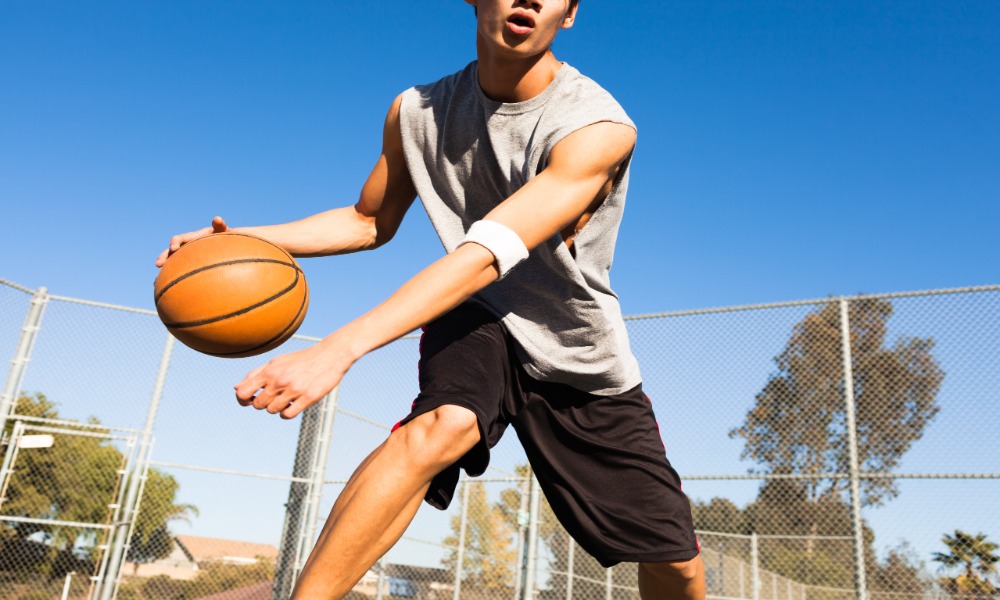
Finding time to practice with teammates isn’t always easy. School schedules, family commitments, and busy gym calendars can leave you with limited opportunities to work on your game. The good news is that you don’t have to wait for a full practice to keep improving, and these 5 ways to practice basketball without teammates can help you make every session count.
Focus on Consistent Shooting
To build better shooting habits, slow down and pay attention to your rhythm and follow-through on every repetition. When you give each shot a purpose, you’ll notice patterns that help you make smarter adjustments.
As your confidence grows, challenge yourself by changing locations on the court or setting personal goals for each session. That added structure keeps practice engaging while helping you stay focused from start to finish.
Create Game-Like Situations
You can still prepare for real competition when you’re training alone. Imagine a defender closing out, or give yourself a score to beat by the end of the workout. Those small mental challenges encourage you to practice with greater intensity.
If you’re building a space where you can repeat those situations regularly, it also helps to think about your environment. Whether you’re working in a driveway, garage, or backyard court, planning your practice area makes each workout more productive.
Improve Your Ball Handling
Great ball handlers spend countless hours working by themselves. Every dribble gives you another chance to strengthen control. As you improve, you’ll notice that your confidence starts carrying over into games.
Keep your attention on quality instead of speed. Once your movements become more natural, increase the pace while maintaining control, and you’ll continue building reliable habits.
Here are a few ball-handling ideas that fit easily into solo workouts:
- Alternate between both hands without looking down
- Practice changing pace instead of only changing direction
- Stay low to improve balance and control
- Challenge yourself in tighter spaces
- Finish each session with your weaker hand
Build Basketball Conditioning
Your conditioning affects every part of your performance. When your energy drops late in a game, decision-making often declines with it. That’s why solo workouts should include movement that pushes you beyond casual shooting.
Move with purpose between repetitions, keep your intensity high, and give yourself short recovery periods that resemble the pace of real competition. Before long, you’ll notice that you recover faster while maintaining better focus.
Practice With Clear Goals
Decide what you want to accomplish so every minute serves a purpose. That simple habit creates direction instead of leaving you to guess what comes next. As you continue practicing basketball without teammates, you’ll also gain a better understanding of your own strengths and weaknesses. That awareness helps you spend more time improving the areas that matter most instead of repeating the skills you already perform well.
Solo practice gives you complete control over your development. Every session becomes another opportunity to prepare for the moments that matter most once you’re back on the court with your team. The players who improve consistently aren’t always the ones with the most practice partners; they’re the ones who continue to find meaningful ways to grow.
