
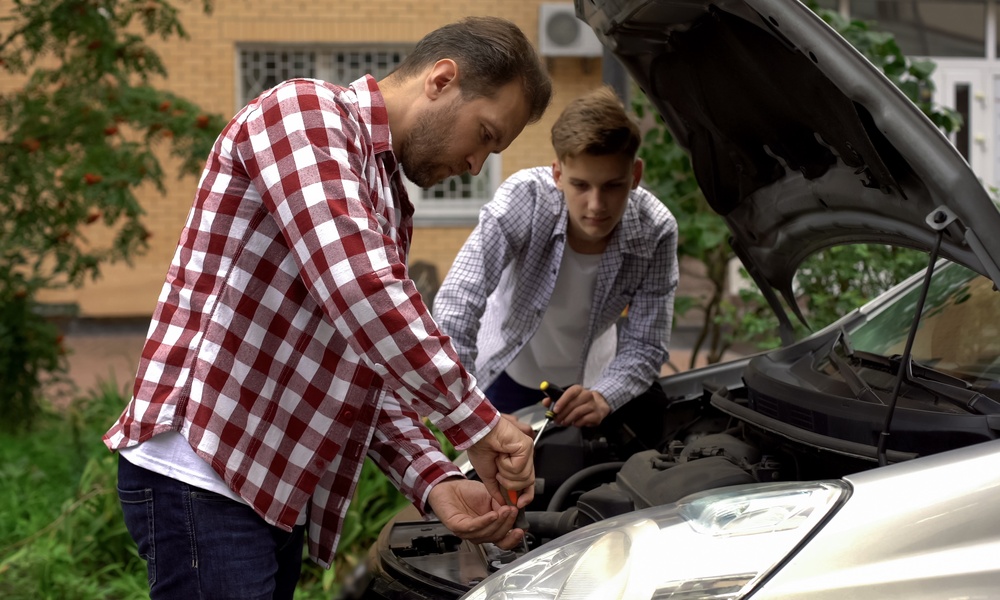
Learning to drive involves understanding traffic laws and controlling the vehicle’s speed and direction. However, there’s more to driving than getting behind the wheel.
Teenagers who just obtained their driver’s license or learner’s permit should have a few car maintenance skills mastered. From changing a flat tire to jumping a car with a dead battery, these skills will help new drivers navigate the roads safely.
1. Check Tire Pressure
Tire pressure directly affects how a vehicle handles and how evenly its tires wear. Learning to use a tire-pressure gauge gives teenagers a simple maintenance skill they can use without specialized equipment or extensive mechanical knowledge.
The recommended pressure appears on the driver-side door placard in most vehicles. Because tire pressure changes with temperature, checking the tires when they’re cold provides a reliable reading. If the air pressure is outside of the desired rating, drivers will know that they need to pump air into the tire or let air seep out.
2. Change a Flat Tire
A flat tire leaves people stranded in potentially unsafe areas. Knowing the complete tire-changing process gives a person the ability to deal with the situation without towing the vehicle to an auto repair shop.
Part of this skill involves becoming familiar with the vehicle before an emergency occurs. Make sure that the vehicle has a spare tire, jack, and lug wrench. Your teen should understand how to loosen the lug nuts before raising the vehicle, position the jack securely, install the spare, and tighten the wheel correctly at the end.
Practicing the process in a driveway makes the process less stressful when a roadside emergency occurs. If traffic, unstable ground, or another hazard makes changing the tire unsafe, knowing when to contact roadside assistance remains part of responsible vehicle care.
3. Determine Car Battery Health
Batteries gradually lose their ability to hold a charge, and heat or cold can place additional strain on an aging unit. There’s no need to understand how to diagnose the entire electrical system. However, individuals can become familiar with the battery’s location and basic condition.
Corrosion around the terminals interferes with the electrical connection, and loose connections contribute to starting problems. Learning what a healthy battery connection looks like makes unusual buildup or damage easier to recognize.
Battery testing provides another useful piece of information. A basic battery tester or a professional test shows whether the battery holds an adequate charge, giving the driver an opportunity to address declining performance before a no-start situation occurs.
4. Jump a Car
A dead battery doesn’t always mean the battery itself has permanently failed. Lights left on or another temporary drain can leave a vehicle without enough electrical power to start the engine, making jump-starting a valuable skill for a new driver.
Teenagers should understand the purpose of jumper cables or a portable jump pack. Correct connection order matters because improper connections can damage electrical components or create a dangerous spark near the battery. The owner’s manual provides the appropriate connection points and procedures for the specific vehicle.
5. Check the Engine Oil
Engine oil lubricates moving parts and controls friction inside the engine. Checking the oil level allows a teenager to identify a low level before insufficient lubrication contributes to excessive wear or engine damage.
For vehicles equipped with a traditional dipstick, the oil level appears between two markings near the tip that represent the minimum and maximum range. After the vehicle sits on level ground, remove the dipstick and wipe it clean before fully inserting it into the tube again. After pulling it out a second time, the current level will be the point where the oil coating ends. Oil below the lower mark indicates that the engine is low, while a reading between the two marks shows that the level falls within the acceptable range.
6. Address Minor Braking Issues
Brake maintenance begins with recognizing when a minor concern could develop into a serious problem. Some signs of brake pad wear develop gradually as friction material wears down. Squealing, vibration, or changes in pedal feel signal deteriorated parts that need repairing promptly.
Addressing minor braking issues doesn’t mean teaching a new driver to perform complex brake repairs. The valuable skill is knowing when a symptom requires attention and communicating the problem clearly to an experienced adult or technician before continued driving worsens the condition.
7. Replace Windshield Wipers
Clear windshield glass allows a driver to see lane markings, traffic signals, and surrounding vehicles when rain or road spray reduces visibility. Wiper blades gradually harden, crack, or separate from their frames. Replacing worn blades supports safe driving.
The replacement process begins with choosing blades that match the vehicle’s required sizes. After lifting the wiper arm away from the windshield, the driver releases the old blade from its connector and secures the new blade using the same attachment point. Connector designs vary between vehicles, so checking the blade instructions or owner’s manual prevents unnecessary force on the assembly. Smooth movement and a clear windshield confirm that the blades sit correctly.
8. Refill Windshield Washer Fluid
Dust, insects, salt, and road residue quickly obscure a windshield. Washer fluid loosens this material so that the wipers are able to clear the glass.
Opening the cap and pouring automotive washer fluid into the reservoir until it reaches the indicated fill level completes the basic task. Drivers in cold climates should select a formula rated for expected temperatures because plain water or unsuitable fluid can freeze.
Learning to refill the reservoir also introduces teenagers to a simple form of troubleshooting. If fluid doesn’t spray after a refill or the reservoir loses fluid unusually quickly, a clogged nozzle, damaged hose, or leak could be responsible. Recognizing those signs prevents repeated refills from masking a problem that requires repair.
9. Replace an Engine Air Filter
An engine air filter prevents dust and debris from entering the engine through the intake system. As the filter collects contamination, the restricted airflow interferes with efficient engine operation.
Replacing air filters involves opening the filter housing, removing the previous filter, and seating a properly sized replacement. Service intervals vary by vehicle and driving environment, so the owner’s manual remains the appropriate reference for replacement timing. Dusty conditions can expose the filter to contamination at a faster rate than cleaner driving environments.
Develop Practical Maintenance Habits
Teenagers don’t have to become mechanics to take responsibility for a vehicle. Learning several car maintenance skills gives them a strong understanding of how the vehicle functions. They’ll be ready to address an automotive issue as soon as it arises.
