
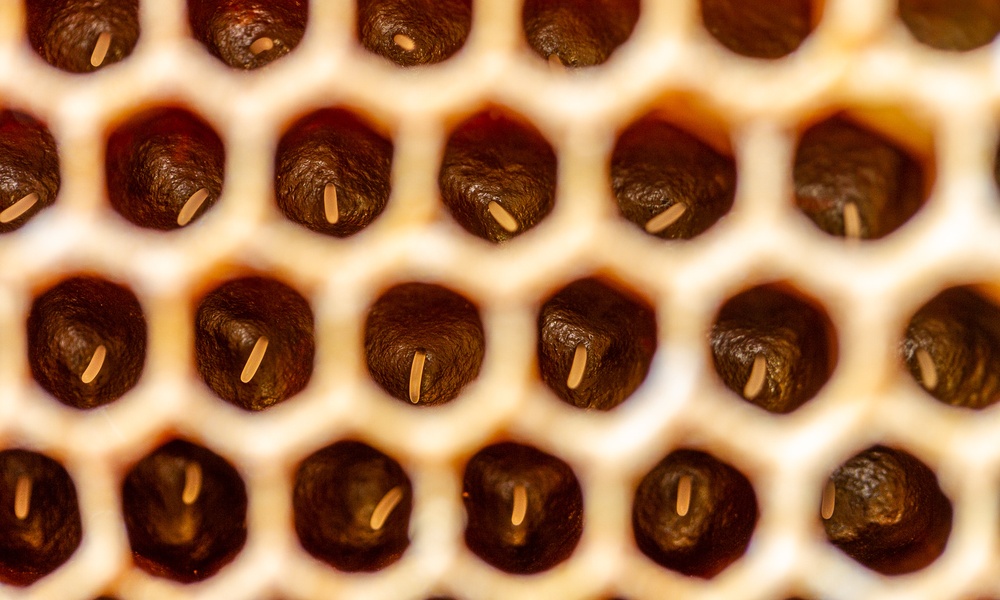
Many people assume that only the queen bee can lay eggs in a honey bee colony. But is this really true? No—it’s actually a common misconception. Here’s the truth behind worker bees laying eggs: it happens, it’s a problem, and there’s a specific reason behind it every time.
Yes, Worker Bees Can Lay Eggs
Worker bees are female, which means they do have reproductive organs. Under normal conditions, the queen’s pheromones suppress that reproductive capacity across the colony. Those pheromones communicate to every worker bee that reproduction is handled.
When that chemical presence disappears, the suppression lifts. Worker bees don’t have mated reproductive systems the way the queen does, so any eggs they produce are unfertilized. Unfertilized eggs only develop into drones, never workers or a new queen.
Why Worker Bees Start Laying
A colony almost never reaches this point unless something went wrong first. The conditions that lead to it are:
- The queen died and wasn’t replaced in time
- The queen was removed and a new one wasn’t introduced
- A new queen failed to mate or was lost before she could begin laying
Once the queen has been gone long enough, her pheromone presence fades from the colony. At that point, a small number of worker bees, sometimes called laying workers, begin producing eggs. These workers often lay multiple eggs per cell and in irregular patterns.
What Should You Do if a Worker Bee Starts Laying Eggs?
Worker bees will only start laying if the queen has been absent long enough for the colony to lose her chemical presence. The solution to this is to requeen the laying worker colony, but this is easier said than done.
The difficulty comes from the laying workers themselves. By the time you’re dealing with this, some of those workers have taken on a quasi-queen identity within the colony. When you introduce a new queen, they’re the ones most likely to reject her. The colony won’t automatically accept a replacement the way a healthy queenless hive would.
Your best approach is to give the colony a frame of open brood from a healthy hive before introducing the new queen. The presence of young brood reorients the colony’s behavior and makes acceptance more likely. Without that step, the odds of a successful introduction drop considerably.
A Colony Without a Queen Won’t Survive
A laying worker situation isn’t sustainable. Because the workers can only produce drones, the colony’s population of foragers and nurse bees drops with every passing week. No new workers are being raised.
Catching the problem early gives you the best chance at saving the colony. Regular hive inspections make that possible. If you spot irregular laying patterns or a spike in drone comb where you wouldn’t expect it, that’s your first indicator to investigate whether the queen is still present and active.
