
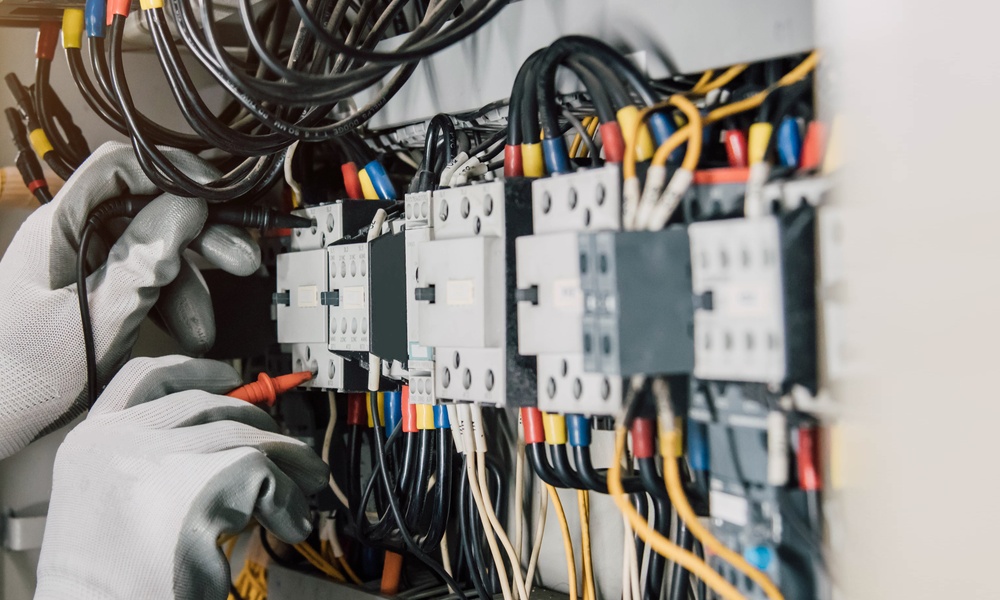
Industrial electrical systems are expected to operate reliably under conditions that would be demanding for ordinary electrical equipment. Heavy loads, long operating hours, vibration, heat, moisture, dust, and repeated production cycles can all put components under considerable stress. Even a well-designed system can eventually develop problems when one part begins to deteriorate.
Understanding common weak points in industrial electrical systems helps facility managers and maintenance teams recognize where problems are most likely to develop. Failures rarely happen without contributing factors. Loose connections, damaged insulation, excessive heat, contamination, or neglected components may gradually undermine performance until a relatively small problem causes an unexpected shutdown.
Electrical Connections and Termination Points
Connections are among the most important areas to monitor because they create interfaces between different parts of an electrical system. Terminals, plugs, connectors, and cable attachment points can loosen or deteriorate due to vibration, thermal cycling, corrosion, or improper installation.
A connection that develops additional resistance may generate heat. That heat can accelerate deterioration in nearby insulation and components, potentially making the original problem progressively worse. In high-power applications, the consequences can become particularly significant because connections must safely handle substantial electrical loads.
Connector design also varies considerably according to voltage, environment, installation requirements, and equipment configuration. Understanding the different types of high-voltage connectors can provide useful context for why selecting an appropriate connection method matters within larger electrical systems. The connector itself is only one part of the design, but its suitability can influence long-term reliability.
Aging and Damaged Insulation
Insulation separates energized conductors from surrounding equipment and other conductive materials. Its condition can therefore have a major effect on electrical safety and system performance.
Industrial environments can be particularly difficult on insulating materials. Heat, chemicals, moisture, mechanical abrasion, and normal aging may gradually reduce their effectiveness. Cables routed near moving equipment can experience repeated friction, while those positioned near heat-producing machinery may deteriorate more quickly than expected.
Insulation damage is not always immediately obvious. Minor cracks or weakened areas can develop long before a cable experiences a noticeable failure. Regular inspections become important for identifying deterioration before it progresses far enough to interrupt operations or damage other equipment.
Loose Wiring and Fasteners
Industrial machinery frequently produces vibration, and even modest vibration can matter when equipment operates for thousands of hours. Over time, repeated movement can contribute to loose terminals, mounting hardware, and wiring connections.
Loose wiring can create intermittent problems that are particularly frustrating to diagnose. A machine might operate normally most of the time but experience occasional faults under certain loads or operating conditions. These inconsistencies can lead maintenance personnel to investigate controls, motors, or other components when the actual problem is a relatively simple connection issue.
Routine inspection and proper installation practices help reduce this risk. Maintenance schedules should account for the operating environment rather than assuming that electrical connections will remain unchanged indefinitely.
Heat Buildup Inside Electrical Equipment
Heat is a persistent challenge in industrial electrical systems. Electrical resistance naturally generates some heat, while motors, drives, transformers, power supplies, and other components may add considerably more.
Problems develop when equipment cannot dissipate heat effectively. Blocked ventilation, dirty filters, failed cooling fans, overcrowded enclosures, or unexpectedly high loads can raise operating temperatures. Components exposed to excessive heat may experience accelerated aging, making thermal management an important part of long-term reliability.
Heat problems can also indicate another underlying weakness. An unusually warm terminal, for example, could point to a loose or deteriorating connection rather than a ventilation issue. Identifying the cause of abnormal temperatures is therefore more useful than simply addressing the heat itself.
Moisture and Environmental Contamination
Industrial electrical systems rarely operate in perfectly clean environments. Depending on the facility, equipment may encounter dust, metal particles, oil, chemicals, humidity, washdown water, or other contaminants.
These substances can interfere with electrical components in different ways:
- Dust accumulation may restrict airflow and trap heat.
- Moisture can encourage corrosion or create unwanted conductive paths.
- Oil and chemicals may degrade certain insulating or sealing materials over time.
Enclosures and seals provide important protection, but they are not immune to aging or damage. Doors that are repeatedly opened, deteriorated gaskets, incorrectly installed cable entries, and damaged seals can allow contaminants to reach sensitive equipment. Environmental protection therefore requires ongoing attention rather than being treated solely as an installation concern.
Overloaded Circuits and Components
Industrial facilities change over time. New equipment is installed, production demands increase, machinery is modified, and operating schedules become longer. Electrical systems originally designed around one set of requirements may eventually be asked to support something very different.
Persistent overloading places additional stress on wiring and electrical components. Excessive current can increase heat, accelerate insulation deterioration, and reduce component life. Even when protective devices prevent immediate catastrophic failure, repeatedly operating equipment close to its limits can create long-term reliability concerns.
Electrical capacity should therefore be reviewed when facilities expand or machinery requirements change. Assuming an existing system can accommodate additional demand without evaluation can introduce weaknesses that remain hidden until production increases.
Circuit Protection Problems
Fuses, breakers, relays, and other protective devices are intended to limit damage when abnormal electrical conditions occur. Their effectiveness, however, depends on proper selection, installation, and maintenance.
A protective device that is incorrectly sized may not respond as intended. Repeated nuisance trips can also tempt workers to focus solely on restoring operation rather than investigating why the device keeps activating. Frequent trips should be treated as information about the system, not simply as an inconvenience.
Protection strategies may also need to evolve as equipment changes. Adding machinery or modifying electrical loads without reviewing existing protective devices can leave a system configured for conditions that no longer exist.
Building Reliability Around the Entire System
Industrial electrical reliability depends on more than choosing high-quality individual components. Connections, insulation, cooling, protection, grounding, cable routing, environmental conditions, and maintenance practices all interact. A weakness in one area can increase stress somewhere else.
Recognizing common weak points throughout industrial electrical systems allows maintenance teams to focus attention where gradual deterioration is most likely to create larger consequences. Regular inspections, accurate documentation, appropriate component selection, and timely maintenance can reduce the likelihood that minor electrical issues develop into costly interruptions.
The most reliable facilities treat electrical maintenance as an ongoing process rather than something performed only after equipment stops working. By identifying deterioration early and considering how each component fits into the larger system, operators can improve reliability while protecting the equipment their production processes depend on
