
Gold price prediction 2026 explained with expert forecasts, economic drivers, inflation risks, and investment outlook.
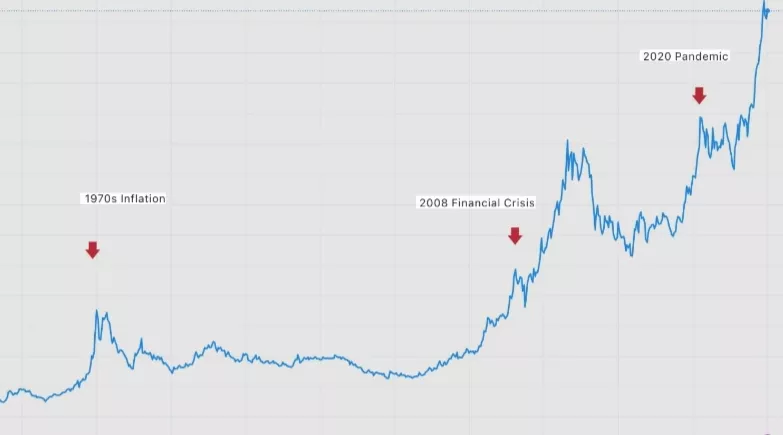
Gold price forecast trends toward 2026
Why Gold Price Predictions for 2026 Matter
As global markets move through economic uncertainty, inflation cycles, and geopolitical tension, investors are increasingly focused on gold price prediction 2026.
Gold has long served as a hedge against inflation, currency volatility, and market downturns, making its future price direction one of the most closely watched topics in financial markets.
With central banks adjusting interest rates, governments managing debt levels, and investors reassessing risk, gold’s trajectory in 2026 could define portfolio strategies worldwide.
Current Gold Market Overview
Gold prices have remained resilient despite fluctuating interest rates and shifting monetary policy. Over recent years, demand has been driven by:
- Persistent inflation concerns
- Central bank gold purchases
- Global geopolitical instability
- Strong investor interest in safe-haven assets
These factors continue to shape long-term expectations heading into 2026.
Gold Price Prediction 2026: Expert Forecast Ranges
Financial analysts and market strategists generally project gold prices in 2026 to trade within a broad but upward-leaning range.
Forecast Consensus (Estimates)
- Bearish scenario: $1,900 – $2,050 per ounce
- Base case scenario: $2,100 – $2,300 per ounce
- Bullish scenario: $2,400 – $2,700 per ounce
While no forecast is guaranteed, most long-term outlooks suggest gold will remain well-supported due to macroeconomic pressures.
Key Factors Influencing Gold Prices in 2026
1. Inflation and Monetary Policy
Inflation remains one of the strongest drivers of gold demand. If inflation stays elevated into 2026, gold prices could rise as investors seek protection against declining purchasing power.
Conversely, aggressive interest rate hikes could temporarily limit upside, though historically gold regains strength during economic slowdowns.
2. Central Bank Gold Buying
Central banks around the world have increased gold reserves to reduce reliance on fiat currencies. Continued accumulation by emerging-market central banks could place sustained upward pressure on gold prices.
3. Geopolitical Risk and Global Stability
Geopolitical uncertainty, including trade disputes and regional conflicts, historically strengthens gold demand. Any escalation in global risk could accelerate gold’s role as a safe-haven asset in 2026.
4. US Dollar Strength
Gold typically moves inversely to the US dollar. A weaker dollar environment in 2026 would likely support higher gold prices, while a strong dollar could cap gains.
Gold Investment Outlook for Long-Term Investors
For long-term investors, gold remains less about short-term speculation and more about:
- Portfolio diversification
- Risk management
- Inflation hedging
Analysts often recommend allocating a modest percentage of portfolios to gold rather than attempting precise market timing.
Is Gold a Good Investment in 2026?
Most financial strategists agree that gold’s role in 2026 will remain relevant, particularly if:
- Inflation remains above central bank targets
- Economic growth slows
- Equity market volatility increases
Gold may not always outperform equities, but it continues to offer stability during uncertain economic cycles.
For expert market analysis, investment forecasts, and global finance news, visit The World Beast daily.
