
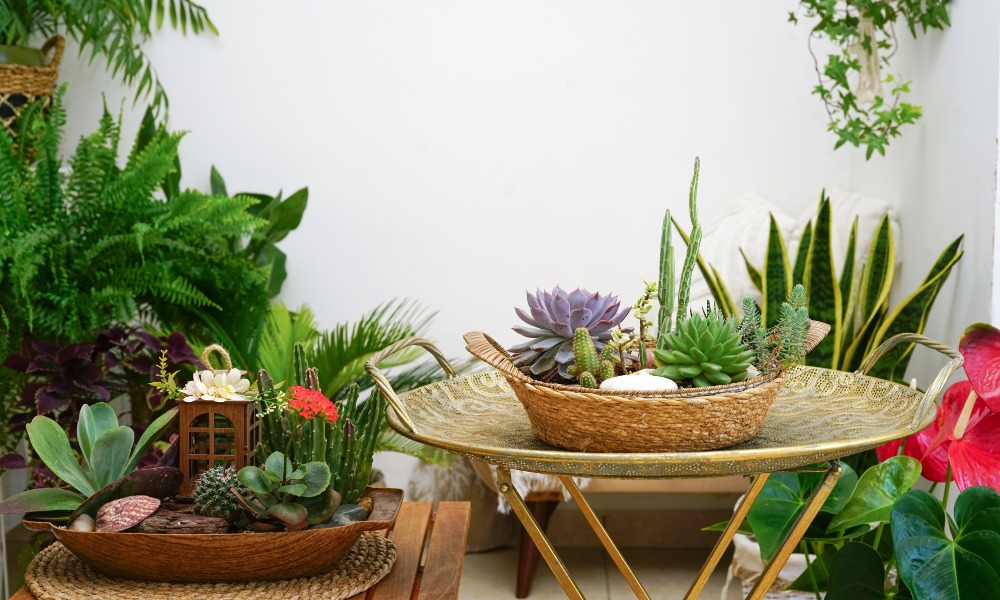
A living room can have beautiful furniture and carefully chosen artwork yet still feel like something’s missing. Perhaps the space needs a little life. A dramatic monstera beside the sofa or greenery cascading from a bookshelf can change the atmosphere without requiring a major renovation.
Houseplants bring movement into rooms that otherwise remain much the same throughout the year. Their leaves grow toward the sunlight, and familiar corners gradually take on new character.
The beauty of creating a beautiful indoor plant sanctuary lies in treating greenery as part of your home’s personality. Your retreat might resemble a lush tropical hideaway or a quiet reading nook with a few leafy companions.
Whatever your preference, an inviting indoor garden begins with imagination and a willingness to experiment.
Picture Your Own Little Escape
What would make you want to spend an extra half hour in a particular room?
Perhaps you’d enjoy drinking your morning coffee beside a window overflowing with greenery. Maybe a comfortable chair beneath a large leafy plant sounds more appealing after a long workday.
Start with that feeling rather than a shopping list.
A tropical-inspired sanctuary might feature broad leaves and abundant foliage. If your home has a minimalist interior, a few sculptural plants with interesting silhouettes could make a stronger impression.
Consider how the space connects with the rest of your home. A plant-filled corner should feel like a natural extension of the room, not a separate display.
Botanical gardens and shaded courtyards can offer inspiration, especially in how they create intimacy through greenery. You can capture some of that atmosphere at home without recreating an elaborate garden.
Create a Scene Worth Looking At
One common decorating mistake involves placing every houseplant in a neat row along the windowsill. Although this arrangement may provide suitable light, it rarely creates the depth that makes indoor gardens visually interesting.
Instead, picture the greenery as a layered landscape.
A tall bird of paradise can provide a striking backdrop in a bright room, while a compact peperomia introduces detail closer to eye level. A trailing philodendron can soften the edge of a shelf.
The contrast between upright growth and cascading foliage gives the arrangement a more organic appearance.
Play With Height and Texture
A few design choices can bring the arrangement together:
- Create a focal point. Give one larger plant room to let its distinctive shape stand out.
- Mix leaf shapes. Pair broad foliage with smaller leaves for visual contrast.
- Experiment with elevation. A sturdy side table can bring a smaller plant into view.
- Leave breathing room. Open space helps individual plants remain visible and supports airflow.
No plant needs to compete for attention. A thoughtful arrangement often has more character than a crowded display.
Let the Light Shape the Design
Sunlight can become one of the most beautiful features of an indoor sanctuary. Afternoon glow through translucent leaves adds a changing quality that artificial decorations rarely achieve.
However, attractive lighting doesn’t always provide suitable growing conditions.
A sunny window may suit certain succulents, while a peace lily generally prefers indirect light. Some foliage plants tolerate lower light levels, although limited illumination can slow their growth.
Before choosing plants, observe how sunlight moves through the space. Window direction, nearby structures, and seasonal changes all affect available light. If a spot is too dim, a suitable grow light can help. Let the light guide your arrangement for a natural feel.
Give Your Greenery a Beautiful Backdrop
A plant sanctuary extends beyond the edges of its pots. The surrounding walls shape how the foliage looks and how welcoming the room feels. Deep green leaves against a warm, clay-colored wall can create a cozy atmosphere, while the same plants against soft white may make the room feel lighter.
Muted sage complements natural materials, especially when wooden furniture is already a prominent feature of the space.
A fresh wall color can make your greenery stand out in unexpected ways. If you’re planning to repaint, consider how the shade will complement your plants throughout the day. Choosing low-VOC paints for your indoor space can also help limit certain chemical emissions compared with traditional paints, making them worth considering for a room where you spend plenty of time.
Even a subtle change in wall color can give familiar plants a fresh appearance, making the space feel more inviting without adding anything new.
Make the Space Feel Like Somewhere You’d Stay
An impressive plant display may catch your eye, but a sanctuary should offer more than visual appeal.
A comfortable seat can make greenery part of everyday life. A small armchair by a window might become your favorite reading spot, while a cushioned bench can create a similar feel in a compact apartment.
Natural materials add warmth. Woven baskets and linen upholstery complement foliage without overpowering its colors. Consider the space between furniture and plants, especially along walkways. Leaves shouldn’t block paths, and watering should remain convenient.
Even the sounds around you can influence the experience. A quiet corner away from household activity may feel peaceful without any elaborate additions.
Quick Tip: Set the Mood After Sunset
Your plant sanctuary can feel just as inviting in the evening. Place a warm table lamp beside your favorite chair to cast a gentle glow over the foliage and create a relaxed atmosphere after daylight fades.
Keep decorative lamps far enough from leaves to prevent heat damage, and make sure your plants get the darkness they need for their natural growing cycles. With the right lighting, your green corner can be a pleasant place to unwind after dinner.
Keep the Jungle Beautiful Without Making It a Chore
An indoor garden stays attractive only when its plants thrive. Rather than watering everything on the same day, check each plant’s soil and follow its needs. Pots with drainage holes prevent excess water from collecting around roots.
Consider humidity, especially for tropical plants. Some enjoy moist air, but persistently damp conditions can encourage mold.
As plants mature, their needs and appearance change. Vines may need pruning, and larger plants may outgrow their original spots. These changes are a chance to refresh your arrangement: moving a healthy plant to a roomier location can bring interest to another part of your home.
If you have pets, check whether a plant is toxic before bringing it home. Some popular houseplants can harm animals that chew their leaves.
Let Your Indoor Retreat Tell Its Own Story
A beautiful sanctuary doesn’t need to resemble a photograph from a design magazine. Perhaps your favorite plant came from a family member, or you’ve spent months watching a small cutting develop into a thriving vine.
Those personal connections give an indoor garden character that expensive planters cannot reproduce.
As your collection changes, you may find new ways of creating an indoor plant sanctuary at home that suit your evolving taste. One season might inspire a dramatic arrangement near the window, while another encourages a simpler display.
Eventually, that once-forgotten corner may become the place you gravitate toward after a busy day, with familiar greenery waiting to welcome you back.

 The World Beast

