
Avoid costly industrial safety fence installation mistakes. Learn compliance, planning, and safety standards for long-term protection.
Ever wondered why some industrial safety fences fail within months while others protect workers for decades?
Have you considered whether your current fence installation actually meets Australian standards? And here’s the big one—could a simple mistake during installation put your entire workforce at risk?
Getting your industrial safety fence right isn’t just about ticking boxes on a compliance checklist. It’s about creating a genuine barrier between your workers and the hazards that lurk in every industrial environment.
From forklift traffic to heavy machinery zones, the right fencing system acts as your first line of defence against workplace accidents.
Guidance from Safe Work Australia and engineering frameworks outlined by Standards Australia confirm that compliant industrial safety fencing requires proper planning, load rating accuracy, and documented inspection procedures. Yet across facilities, preventable errors continue to undermine performance.
In this guide, we’ll walk you through the most common blunders people make when installing industrial safety gates and fencing.
You’ll discover planning pitfalls that trip up even experienced facility managers, installation errors that compromise the entire system, and budgeting mistakes that end up costing far more in the long run.
By the end, you’ll have a clear roadmap for getting your industrial safety fence installation spot-on the first time.
What Are Industrial Safety Gates and Fences?
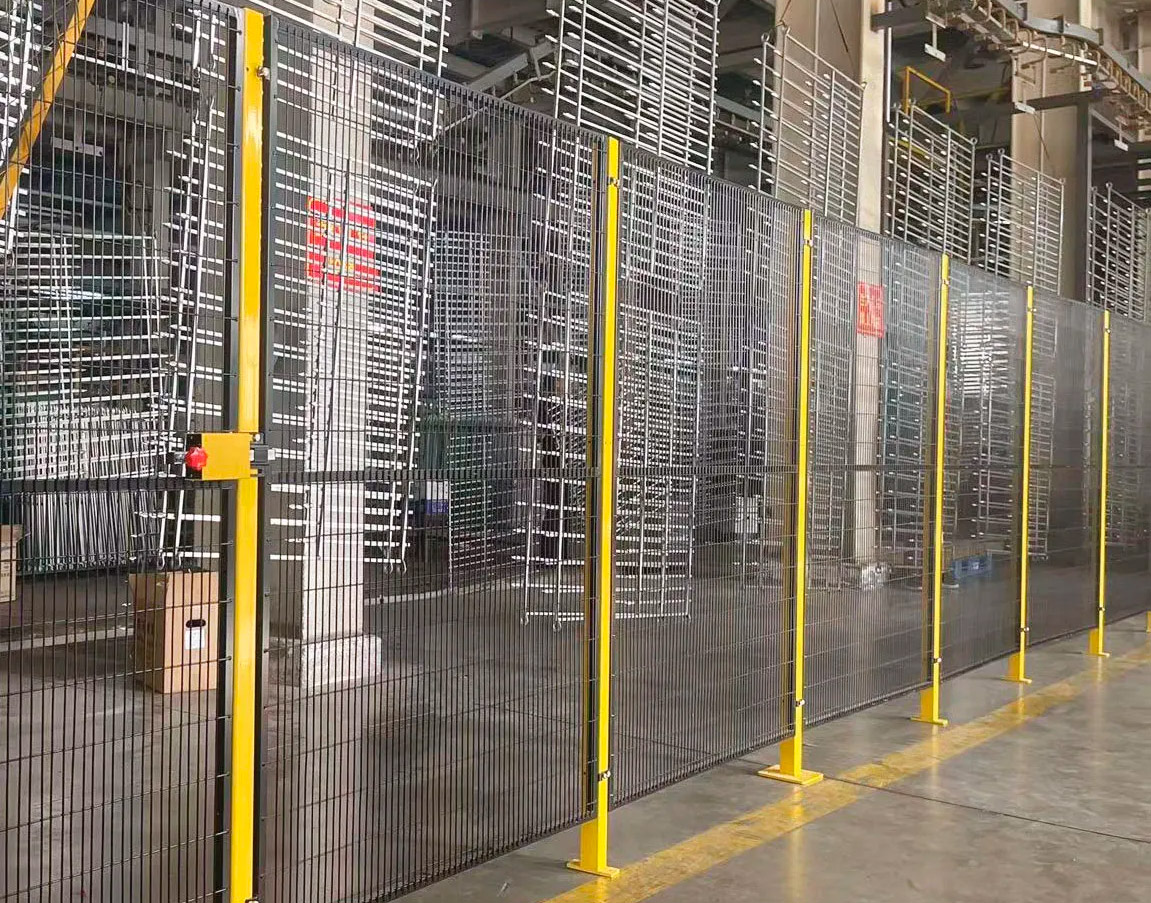
Industrial safety gates and fences are purpose-built barriers designed to protect workers from hazardous areas, control pedestrian and vehicle traffic, and create defined zones within your facility.
Unlike standard fencing, these systems must withstand significant impacts, meet strict regulatory requirements, and integrate seamlessly with your operational workflow.
Understanding the Different Types of Industrial Safety Gates
The range of industrial safety gates available can feel overwhelming at first. You’ve got swing gates for pedestrian access, self-closing gates that eliminate human error, and heavy-duty options designed specifically for forklift and machinery zones.
Each type serves a distinct purpose, and choosing the wrong one creates problems down the track.
Sliding gates work brilliantly in tight spaces where swing clearance isn’t available. Pallet gates allow safe material transfer between mezzanine levels without creating fall hazards.
The key is matching your gate selection to your specific operational needs—not just grabbing whatever’s cheapest or most readily available.
Key Components of an Effective Industrial Safety Fence System
A solid safety fence system isn’t just posts and panels. It includes secure anchor points, appropriate height specifications, integrated gates, and often, additional features like kick plates and mesh infill.
The quality of each component matters enormously, as one weak link can compromise the entire system.
Common Planning Mistakes Before Installation
Planning failures account for the majority of industrial safety fence problems. Rushing this stage almost always leads to costly corrections later.
Failing to Conduct a Proper Site Assessment
Walking around with a tape measure for ten minutes doesn’t constitute a proper site assessment.
You need to analyse traffic patterns, identify all hazard zones, and understand how your operations might change over time.
Many facilities skip this step and end up with fencing that blocks essential access routes or leaves dangerous areas unprotected
Ignoring Australian Workplace Safety Regulations and Standards
Australian workplace safety regulations aren’t suggestions—they’re legal requirements. Safe Work Australia guidelines specify minimum heights, load capacities, and installation requirements that your fence must meet. Ignoring these standards exposes you to serious liability and potentially hefty fines from workplace safety inspectors.
Choosing the Wrong Height and Specifications
A 900mm barrier might look adequate until a wayward forklift proves otherwise. Different hazard types require different specifications. High-traffic forklift zones typically need barriers rated for significant impact loads, while pedestrian-only areas can use lighter specifications. Getting this wrong means replacing your fence far sooner than expected.
Underestimating the Total Area That Needs Protection
It’s surprisingly common for facilities to fence off obvious hazards while completely overlooking secondary danger zones.
Loading docks, elevated platforms, machinery maintenance areas—all of these require proper protection. Map out every hazard in your facility before ordering materials.
How Do I Choose the Right Industrial Safety Gates for My Facility?
Selecting industrial safety gates requires balancing multiple factors: traffic flow, access requirements, and the specific hazards you’re protecting against.
Matching Gate Types to Traffic Flow Requirements
High-traffic pedestrian areas need gates that open easily and close automatically. Low-frequency access points can use manual gates without creating bottlenecks.
Analyse how many people and vehicles pass through each access point daily before making your selection.
Considering Forklift and Heavy Machinery Access Points
Forklift gates must be wide enough for your largest equipment plus a safety margin. They should also be rated for accidental impact—because let’s face it, accidents happen.
Spring-loaded gates that return to the closed position automatically prevent workers from leaving dangerous openings exposed.
Self-Closing vs Manual Gates: Which Is Right for You?
Self-closing gates eliminate the human error factor entirely. Workers rushing to meet deadlines often forget to close manual gates behind them, creating dangerous gaps in your protection.
While self-closing mechanisms cost more initially, they provide far better long-term protection.
Installation Errors That Compromise Safety
Even the best industrial safety gates become worthless when installed incorrectly. These errors are more common than you’d think.
Poor Anchor and Foundation Preparation
Your fence is only as strong as what holds it to the ground. Rushed anchor installations on unstable surfaces create a fence that looks solid but fails under pressure.
Concrete anchors need proper curing time, and chemical anchors require correct mixing ratios. Cutting corners here is asking for trouble.
Incorrect Spacing Between Posts and Panels
Too much space between posts and panels weakens the entire structure. Australian standards specify maximum distances for good reason—impact forces distribute across the system, and excessive gaps create failure points. Follow manufacturer specifications precisely.
Installing Gates That Swing in the Wrong Direction
Gates that swing toward hazards instead of away from them create new dangers rather than preventing existing ones.
In emergency situations, panicking workers need gates that open in their natural escape direction. This seems obvious, but it’s frequently overlooked during installation.
Neglecting Integration with Existing Safety Systems
Your safety fence shouldn’t exist in isolation. It needs to integrate with existing traffic management systems, emergency lighting, and evacuation routes.
A fence that blocks emergency access or conflicts with existing safety protocols creates more problems than it solves.
What Are the Australian Standards for Industrial Safety Fencing?
Understanding compliance requirements protects both your workers and your business from serious consequences.
Compliance Requirements You Cannot Afford to Miss
AS 4024.1 covers safeguarding of machinery, while AS 1657 addresses fixed platforms, walkways, stairways and ladders. Your fence installation must meet the relevant standards for your specific application.
Non-compliance isn’t just a legal issue—it’s a moral one. Workers trust that their employer has taken proper precautions.
Height and Load Specifications for Different Industries
Standard industrial safety fencing typically requires minimum heights of 1000mm to 1200mm, depending on the hazard.
Impact-rated barriers in forklift zones must withstand loads of at least 10kN. Your industry and specific hazards determine which specifications apply to your installation.
Budgeting Blunders to Avoid
Trying to save money on safety fencing often costs far more in the long run.
Choosing Cheap Materials Over Quality and Durability
Budget steel fencing might look identical to premium products initially. Give it six months in a harsh industrial environment, and the difference becomes painfully apparent.
Corrosion, impact damage, and general wear degrade cheap materials rapidly, requiring expensive replacements.
Forgetting to Factor in Maintenance Costs
Your initial purchase price represents only part of the total cost. Regular inspections, repairs, gate mechanism servicing, and eventual component replacement all add up.
Quality products from reputable manufacturers typically require less maintenance and last significantly longer.
The Australian Institute of Health and Safety recommends structured workplace hazard review systems to ensure engineering controls remain effective over time.
Skipping Professional Installation to Save Money
DIY installation might save a few thousand dollars upfront. However, incorrect installation voids warranties, creates compliance issues, and often requires expensive professional correction later. The maths rarely works out in your favour.
How Often Should Industrial Safety Gates Be Inspected?
Regular inspection catches problems before they become dangerous failures.
Creating a Maintenance Schedule That Works
Monthly visual inspections should be standard practice. Quarterly detailed inspections checking anchor points, gate mechanisms, and structural integrity provide deeper assurance. Annual professional assessments by qualified inspectors complete your maintenance framework.
Warning Signs Your industrial Safety Fence Needs Attention
Loose posts, damaged panels, gates that don’t close properly, visible corrosion, and worn gate mechanisms all indicate problems requiring immediate attention. Don’t wait until something fails catastrophically—address issues as soon as you spot them.
Frequently Overlooked Considerations
Beyond the basics, several factors often slip through the cracks during planning and installation.
Visibility and Signage Requirements
Your fence should enhance visibility of hazards, not obscure them. Bright colours, reflective elements, and appropriate warning signage help workers recognise danger zones instantly. Poor visibility defeats the entire purpose of your safety installation.
Emergency Access and Evacuation Routes
In emergencies, workers need to escape quickly. Your industrial safety fence must include adequate emergency exits that open easily from the danger side.
Blocked evacuation routes during fires or other emergencies can turn a manageable situation into a tragedy.
Future Expansion and Flexibility
Business growth often requires facility modifications. Installing a fence system that can be easily extended or reconfigured saves significant expense when your needs change. Modular systems offer the greatest flexibility for evolving operations.
Protecting Your Workforce and Your Investment
Installing industrial safety fence and correctly requires careful planning, quality materials, professional installation, and ongoing maintenance.
The mistakes we’ve covered—from inadequate site assessments to budget-driven compromises—all share a common thread: they prioritise short-term convenience over long-term protection.
Your workers depend on you to create a safe environment. Your business depends on avoiding costly accidents, regulatory penalties, and equipment damage.
Getting your industrial safety fence right the first-time addresses both concerns simultaneously, creating a genuinely protective barrier that serves your facility for years.
Before installing or upgrading your industrial safety fence, conduct a full compliance review and consult a qualified safety engineer. Visit The World Beast Industry Desk for expert-backed workplace safety insights that protect both your workforce and your bottom line.
