
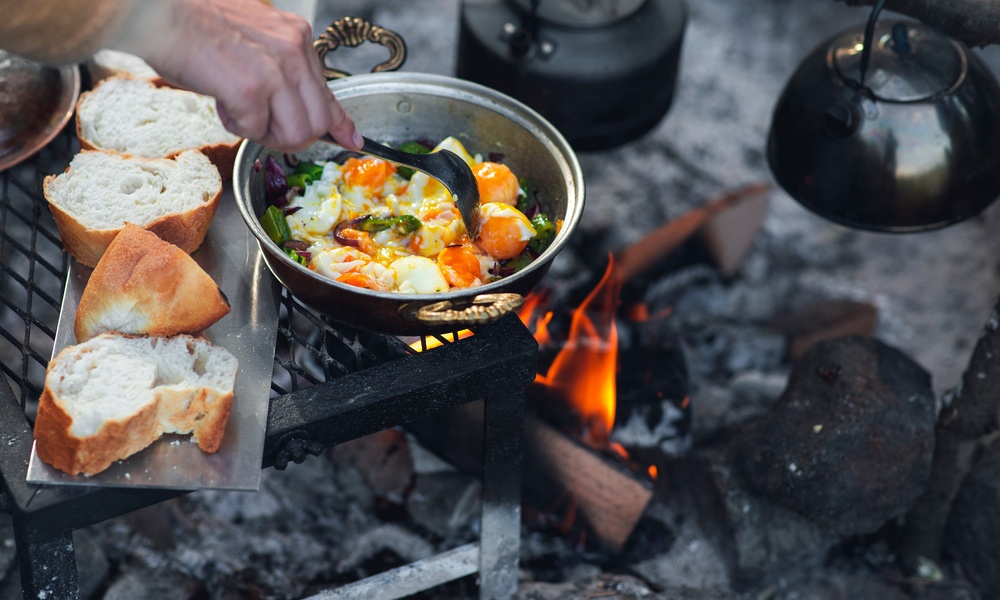
Camping meals do more than fill a plate. They create structure for the day, bring people together after dark, and turn a basic campsite into a more comfortable place to spend time. Good preparation makes that experience easier. Below, our guide to outdoor cooking will explain what you need to cook while camping, from cookware to fuel and more.
Start With a Simple Cooking Setup
A successful camp kitchen begins with a setup that matches the trip. A short weekend at a developed campground may support a stove, cooler, and full cook kit. A more rustic trip may call for a grate, a cast-iron pan, and a compact prep station. In either case, the goal stays the same: create a reliable system for heat, food storage, and cleanup.
For most campers, the core equipment includes a portable stove or grill grate, a lighter or waterproof matches, a skillet or pot, cooking utensils, a sharp knife, and a cutting surface. A cooler with enough ice also matters for trips that include meat, dairy, or other perishable ingredients. These outdoor cooking basics are what you need to cook while camping.
Choose Cookware That Handles Real Heat
You need durable cookware that’s also easy to clean. Cast iron remains a strong choice because it holds heat well and works over flames or coals. Stainless steel also performs well for boiling water, heating soups, or cooking one-pot meals. Thin pans can scorch food quickly, so sturdier materials usually make meal prep more predictable.
Lids, heat-resistant gloves, and long-handled utensils also improve control. They help campers manage hot surfaces safely and move food without standing too close to the fire.
Fuel and Fire Matter More Than People Expect
Heat control shapes every part of camp cooking. A stove offers consistency, but many campers still prefer the flavor and experience of a wood fire. That choice makes fuel quality important.
If you’re bringing your own wood to the campsite, kiln-dried firewood is the perfect choice for cooking because of its low moisture content, quick ignition, and even heat. Wet or green wood can create excess smoke, uneven heat, and poor cooking conditions. Dry, clean-burning wood gives cooks better control and a steadier coal bed.
Plan Meals Before You Leave
Meal planning reduces waste and stress. Camp-friendly foods include foil-packet dinners, pasta, rice dishes, eggs, sausages, beans, potatoes, and pre-chopped vegetables. Marinades, spice blends, and measured ingredients save time at the site. Water also deserves planning, since cooking, cleaning, and drinking all draw from the same supply.
The best meals fit the environment. Wind, limited light, and uneven ground can complicate recipes that seem simple at home. Smart campers choose dishes with a short ingredient list and a clear cooking method. That approach makes camp cooking more enjoyable and less chaotic.
Keep Safety and Cleanup in View
Food safety remains essential outdoors. Campers should separate raw meat from ready-to-eat foods, keep perishables cold, and wash hands and tools between tasks. They should also control grease, store leftovers carefully, and put out fires completely after cooking.
Outdoor cooking isn’t complex. It only requires useful tools, dependable fuel, and a plan that respects the conditions of the campsite. With that foundation, campers can cook with confidence and make the meal part of the trip worth remembering.
