
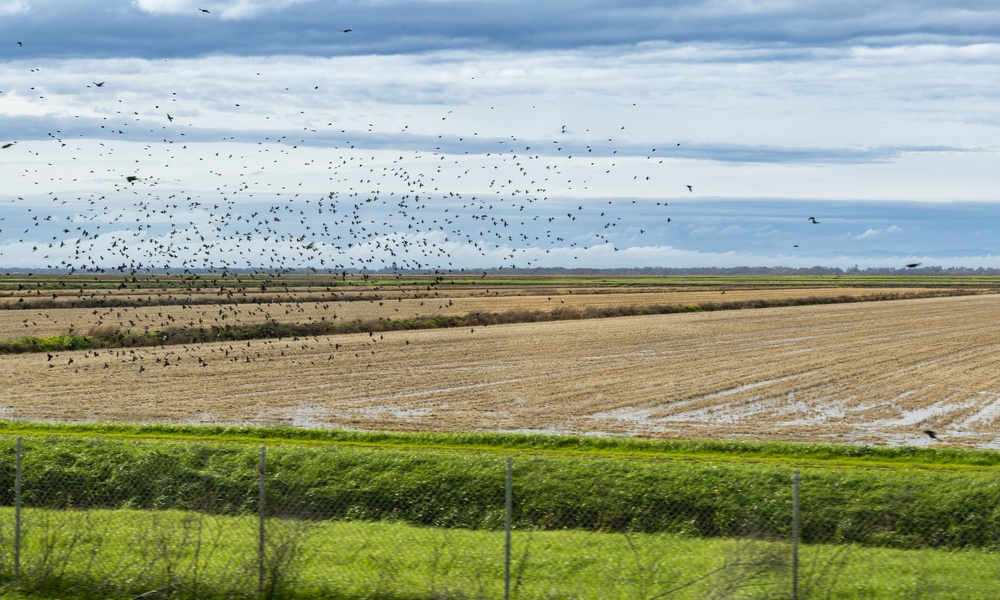
Bird activity can quickly undo weeks of progress in the field. From pecked tomatoes to stripped berry bushes, damage can build before growers spot the cause.
Fortunately, there are safe and humane ways to protect crops from birds that do not involve harmful traps or toxic deterrents.
Keep reading to learn how to redirect behavior instead of eliminating birds from the environment entirely. This way, you can help maintain a balance between agriculture and wildlife.
Read More: FAO – Sustainable Agriculture and Wildlife
Use Physical Barriers Where Possible
Netting remains one of the most effective methods to physically block birds from accessing vulnerable plants. It works especially well for small orchards, vineyards, and berry rows.
Choose netting with a mesh fine enough to keep birds out but wide enough to avoid trapping them.
Secure the netting at the base and corners to prevent access from below. For larger operations, row covers or tunnel systems provide a scalable solution without interfering with irrigation.
Try Reflective and Moving Deterrents
Birds rely more on sight than scent, making visual interference a first line of defense. Reflective tape, pinwheels, and even old compact discs can scatter light into patterns that disrupt flight paths.
Movement adds another layer of confusion. Wind-powered streamers or Mylar balloons that sway unpredictably help discourage landing.
These tactics work best when rotated or rearranged regularly to prevent birds from becoming too familiar with the layout.
Use Sound Responsibly
Sound deterrents, such as recorded predator calls or loud, intermittent noises, can temporarily startle birds. However, frequent or continuous use can desensitize birds.
To prevent this, ensure sound levels are low enough to avoid disturbing nearby residents or livestock, and activate the systems only during periods of peak bird activity.
Use sound as an addition to, rather than the main component of, your bird deterrence strategy.
Automated Options Offer Modern Solutions
Technology continues to open new approaches for wildlife management. One method gaining traction uses lasers to guide birds.
Read More: Audubon Society – Birds and Farming
Green lasers, when projected across fields at the right angles and times, disrupt a bird’s sense of safety without causing physical harm.
Because birds perceive the laser as a threat, they instinctively fly away. These systems work best in open areas and during early morning or twilight hours.
Automated setups enable timed deployments, reducing the need for constant supervision.
Keep the Environment Unattractive to Pests
Enhance crop protection by making the surrounding environment less inviting to pests. Clean up fallen fruit and discarded feed regularly, cover compost piles securely, and, when possible, eliminate open water sources that can attract unwanted visitors.
Keep the area tidy around storage buildings and fences to reduce perching spots for birds and pests.
Read More: USDA – Integrated Pest Management
Combining routine cleanup with strategic deterrents helps create multiple layers of protection that are effective yet wildlife-friendly.
Long-Term Success Through Low-Impact Control
The most effective systems balance defense with minimal disruption. Whether managing a small garden or a commercial plot, these safe and humane methods for protecting crops from birds enable consistent harvests without causing ecological harm.
With time and thoughtful implementation, growers create spaces where crops thrive, and birds move elsewhere without injury.
Explore more sustainable farming and environmental protection insights at The World Beast.
