
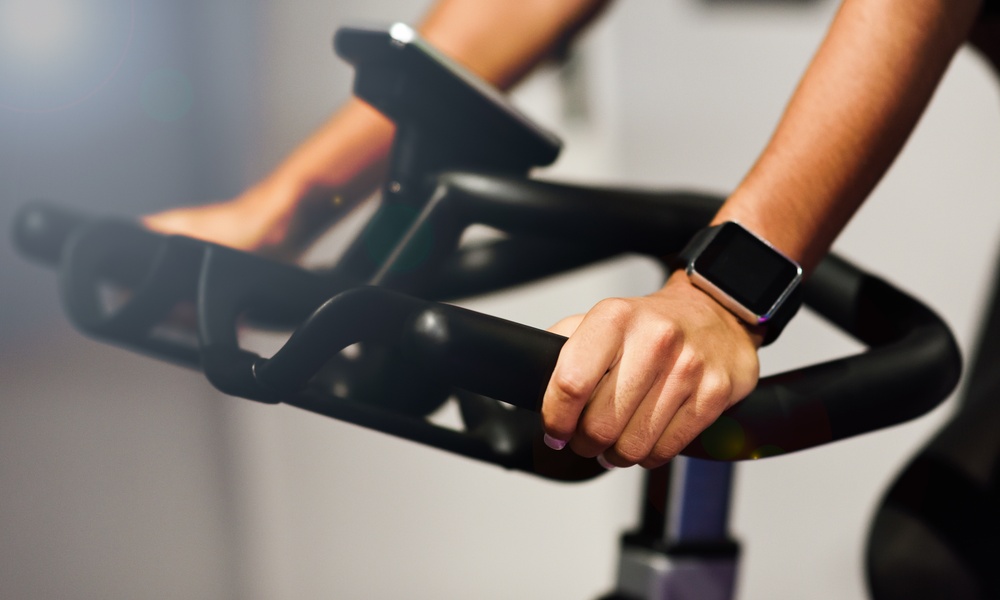
Want to purchase a bike for your home or commercial gym, but can’t decide between a stationary bike and a spin bike? Here’s what you need to know about each option so you can choose the one that gives you or your members the workout experience you want.
What’s a Stationary Bike?
A stationary bike keeps the rider seated in an upright position. The handlebars sit higher than the seat, and the wider saddle gives the rider more support during longer workouts.
Many models include resistance controls and preset programs. This design suits general cardio workouts and riders who prefer a less demanding posture.
There’s a lot to consider before buying a stationary bike for a home or commercial gym. Here are a few pros and cons:
Pros
- The wider seat offers more support during longer rides.
- The upright position places less pressure on the wrists.
- Preset programs guide riders through different resistance levels.
- New riders can learn the controls without much instruction.
Cons
- The riding position doesn’t closely match outdoor cycling.
- Standing climbs feel awkward on many models.
- Some stationary bikes take up more floor space.
What’s a Spin Bike?
A spin bike places the rider in a forward-leaning position. The seat sits closer to handlebar height, which creates a riding posture that resembles a road bike.
A weighted flywheel keeps the pedals moving as the rider changes pace. The resistance knob also allows immediate adjustments during climbs or interval training.
That setup comes with its own advantages and drawbacks:
Pros
- Riders can switch between seated and standing positions.
- Manual resistance controls respond right away.
- The design supports sprinting and harder intervals.
- Many spin bikes have a smaller footprint.
Cons
- The narrow seat may be uncomfortable for new riders.
- The forward posture places more pressure on the wrists.
- Riders need to adjust the seat and handlebars before exercising.
- Beginners may need instruction before harder workouts.
Which Bike Should You Choose?
A stationary bike suits people who want comfortable cardio and an upright riding position. It also fits gyms that serve beginners or members who prefer independent workouts.
A spin bike suits riders who want cycling classes or higher-intensity sessions. The design supports standing climbs and frequent resistance changes without interrupting the workout.
Home gym owners should base the purchase on their preferred riding position. Commercial gym owners need to consider how members use the cardio area. A gym with cycling classes will need spin bikes, while a general fitness center may get greater use from stationary models.
Maintenance also deserves some thought. Spin bikes have simple manual controls, though their flywheels and resistance systems still need regular inspection. Stationary bikes may include more electronic features, so repairs may involve the console or built-in programs.
Match The Bike to Your Gym
Choosing a stationary or spin bike for a gym comes down to the type of workout you want to offer. Stationary bikes support comfortable cardio and suit a wide range of riders. Spin bikes support harder training and give riders more freedom to change positions.
For a home gym, select the bike that matches how you prefer to exercise. For a commercial gym, think about the members who will use the equipment each day. The right bike should fit their training habits and the type of experience your gym provides.
