
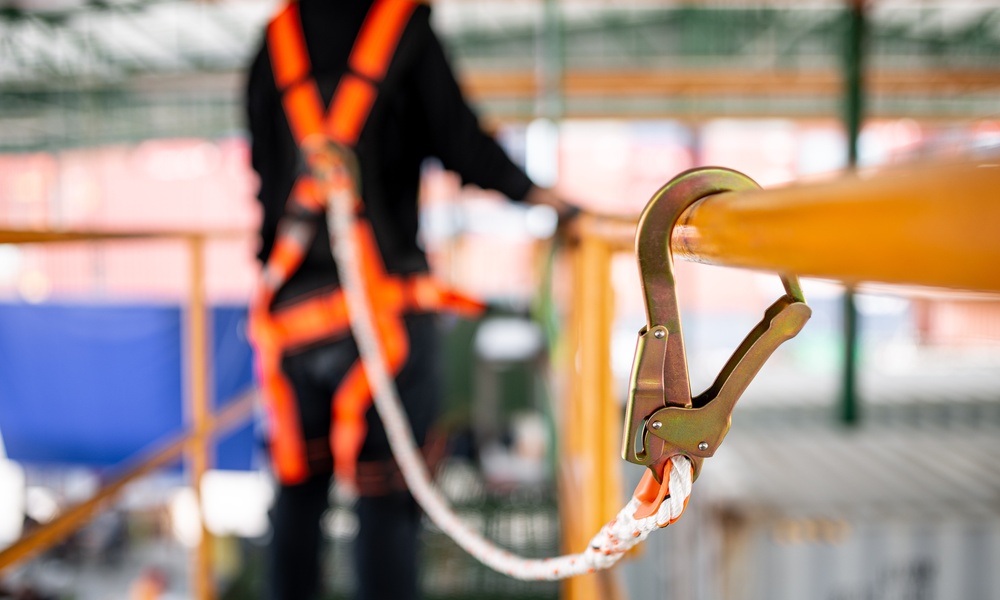
Construction workers frequently need to work at height to install roofing materials or finish upper walls. However, working from an elevated position introduces risks that crews don’t encounter when working on the ground. To prevent falls and complete their tasks safely, workers need equipment that provides proper support and access to their work areas. Understanding the tools that help construction workers work at height gives crews a better idea of which equipment to use for different tasks.
Extension Ladders
Extension ladders consist of two overlapping sections that slide against each other to adjust the ladder’s length. This design allows construction workers to reach elevated areas without using a separate ladder for every height. Workers commonly use them to access rooftops because the ladder can extend beyond the roof’s edge, providing a handhold during the transition.
Once extended, the ladder’s locking mechanisms hold the sections in position. However, these mechanisms don’t prevent the entire ladder from slipping if it’s positioned incorrectly. That’s why the ladder needs firm ground beneath its feet and a secure resting point against the structure. Workers must also maintain three points of contact while climbing.
Supported Scaffolding
Supported scaffolding consists of interconnected frames that hold a temporary platform above the ground. Construction workers stand on this platform while completing tasks along elevated sections of a building. Because the platform extends horizontally, workers have room to move along the work area without climbing down whenever they need to change positions.
The scaffold’s frames transfer the weight of the platform and its occupants to the supporting surface below. Additional frame sections allow crews to build the structure to the height required for the job. However, every section must connect properly to maintain the scaffold’s stability. A competent person must inspect the completed structure before workers use it.
Scissor Lifts
Scissor lifts are powered machines that raise a working platform using a series of crossed metal supports. As the lifting mechanism extends, these supports unfold and push the platform upward. Workers control the platform’s height from onboard controls, allowing them to reach overhead areas without repeatedly climbing a ladder.
Because scissor lifts primarily travel vertically, workers need to position the machine beneath the area they’re accessing. Once the platform reaches the required height, its guardrails provide a barrier around the standing area. This arrangement allows workers to perform overhead tasks while remaining inside the platform. The machine must remain within its operating limits throughout use.
Boom Lifts
Boom lifts feature an elevated platform attached to a movable mechanical arm. Unlike scissor lifts, which primarily raise workers vertically, boom lifts allow the platform to extend outward from the machine’s base. This additional reach makes them useful when construction workers need access to an elevated area with an obstruction beneath it.
The arm’s movement depends on the type of boom lift. Telescopic models extend outward in sections, while articulated models bend at joints to reach around obstacles. Both designs allow operators to position the platform closer to their work without moving the machine directly underneath it. Operators must remain within the manufacturer’s permitted reach and follow the required fall-protection procedures.
Drywall Benches
Drywall benches are elevated platforms that workers use to reach upper sections of interior walls. They have a flat surface supported by sturdy legs, which provides room for workers to stand while they finish drywall. Compared with scaffolding and powered lifts, these benches have lower weight capacities, so workers must account for the load placed on them.
Their compact size makes them convenient for interior projects where larger equipment would take up too much space. Workers can move along the platform to reach different sections of a wall without repeatedly repositioning the bench. However, the combined weight of the worker and their supplies must remain within the manufacturer’s rated capacity.
Safety Harnesses
A full-body safety harness is a wearable device designed to support a worker during a fall when connected to an appropriate fall-arrest system. It consists of adjustable straps that fit around the shoulders and legs, securing the harness to the body. These straps distribute arrest forces across supported areas instead of concentrating them around the waist.
The harness connects to compatible fall-arrest equipment through a designated attachment point. If the worker falls, the connected system arrests the fall while the harness supports the body. However, an improperly fitted harness may move out of position during this process. Workers must adjust the straps correctly and inspect the equipment before each use.
Self-Retracting Lifelines
Self-retracting lifelines are fall-arrest devices that connect a worker’s harness to a suitable anchorage. They contain a retractable line housed inside a mechanical unit, allowing the worker to move without dragging excess line behind them. As the worker moves away from the unit, the line extends, then retracts as the distance decreases.
The device also contains a locking mechanism designed to engage during a fall. When activated, this mechanism limits further line extension, allowing the fall-arrest system to stop the worker’s descent. The equipment must be selected and positioned according to the manufacturer’s instructions. Proper fall clearance remains necessary because the worker travels some distance before the fall stops.
Guardrail Systems
Guardrail systems create protective barriers around elevated working surfaces. They’re commonly installed along exposed platform edges to prevent workers from accidentally stepping or falling off. A typical system includes a top rail and an intermediate rail supported by upright posts, creating a physical boundary between the worker and the drop.
Unlike personal fall-arrest equipment, guardrails are designed to prevent falls before they occur. Workers can move within the protected area without attaching themselves to the railing. However, the system must meet applicable strength requirements to withstand the forces it’s designed to resist. Missing sections compromise that protection by leaving portions of the edge exposed.
Tool Lanyards
Tool lanyards are flexible connecting straps that secure hand tools to an approved attachment point. Workers attach one end to a compatible tool and the other to a suitable connection, preventing the tool from falling freely if they lose their grip. They’re used during elevated construction tasks where dropped equipment could strike someone below.
The lanyard’s length allows workers to handle the attached tool while keeping it secured. When a tool slips from their hand, the lanyard catches it before it reaches the ground. However, the connection must accommodate the tool’s weight and the forces created during a drop. Workers should inspect the lanyard before use to confirm it remains suitable for the attached tool.
Choosing the Right Equipment for Elevated Work
Construction crews use different equipment depending on where they need to work and how much room they need to complete a task. Understanding the tools that help construction workers work at height allows crews to select equipment suited to their jobs. Proper training and regular inspections are also essential for safe operation.
