
Ready for your next trade show? Follow this step-by-step trade show planning guide to design, budget, and execute with confidence.
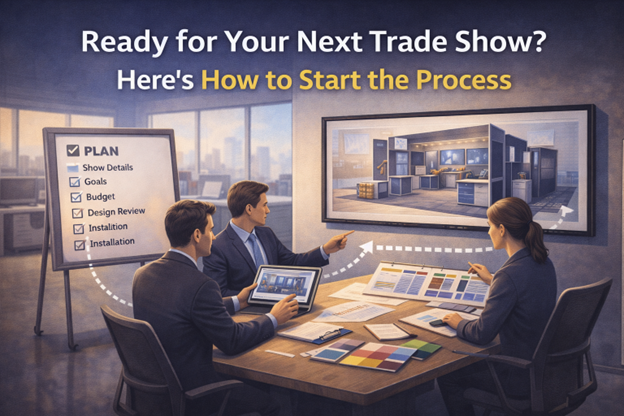
Early trade show planning improves booth design performance.
Trade shows have a way of sneaking up on you.
You wrap up one event, celebrate a successful few days, and suddenly the next show is already circled on the calendar. Booth spaces fill up. Deadlines start approaching. And before you know it, your team is juggling design ideas, shipping questions, and budget conversations all at once.
If that last-minute pressure sounds familiar, you’re not alone.
The truth is, the difference between a stressful trade show and a smooth, confident one usually comes down to one thing: how early and how clearly you start the process. With a structured plan and the right exhibit partner you can turn what feels chaotic into something completely manageable.
According to guidance from Exhibitor Group, early planning reduces last-minute expenses and improves booth performance metrics. The difference between a smooth event and a stressful one begins months before the show floor opens.
Here’s a simple, practical way to get started the right way.
Step 1: Lock in the Show Details First
Before you even think about booth design, confirm the fundamentals:
- Show name, city, and dates
- Booth size and configuration (inline, corner, island, peninsula)
- Move-in and move-out schedules
- Electrical, height, and rigging limitations
These details affect everything-from layout and structure to shipping and installation planning. Getting clarity here prevents costly adjustments later.
Step 2: Define What Success Looks Like
Not every trade show serves the same purpose. Take a moment with your team and ask:
- Are we launching something new?
- Are we focused on lead generation?
- Are we meeting distributors or partners?
- Are we building brand awareness in a new market?
Your objective should guide your booth’s design and function. A product launch booth looks very different from a networking-focused space. When you define success early, your exhibit becomes intentional, not just attractive.
Step 3: Set a Realistic Budget
One of the biggest reasons trade show projects stall is unclear budgeting.
Your budget should account for more than just the booth structure. Consider:
- Design and fabrication or rental
- Shipping and drayage
- Installation and dismantle (I&D)
- Storage between shows
- Graphics, lighting, and technology
When you share a realistic budget range with your exhibit partner, they can recommend solutions that fit-without wasting time exploring ideas that don’t align financially.
Clarity here speeds everything up.
Step 4: Choose the Right Exhibit Partner
This decision makes all the difference.
A true full-service exhibit partner doesn’t just design something visually appealing. They guide you through the entire process-design, production, logistics, installation, dismantle, and storage.
When you bring them in early, they help you:
- Avoid common mistakes
- Build realistic timelines
- Anticipate logistical challenges
- Reduce unnecessary costs
You’re not just hiring a booth builder. You’re choosing a team that helps you navigate the entire trade show journey.
Step 5: Have a Clear Discovery Conversation
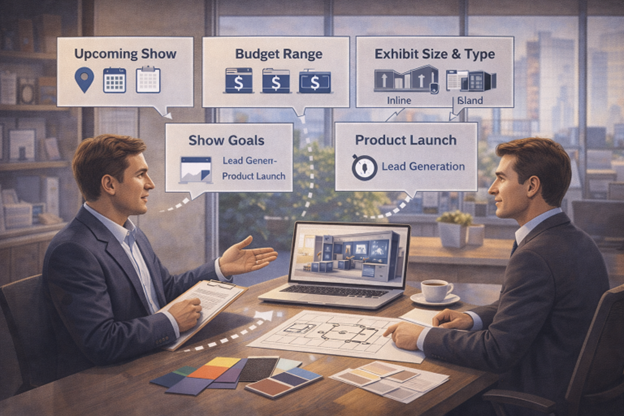
Your first conversation sets the foundation. Be ready to share:
- Your show goals
- Booth size and event schedule for the year
- Budget range
- Products or services you’re highlighting
- Any challenges you’ve faced in past shows
This ensures your booth concept is tailored to your needs-not a generic template with your logo added on.
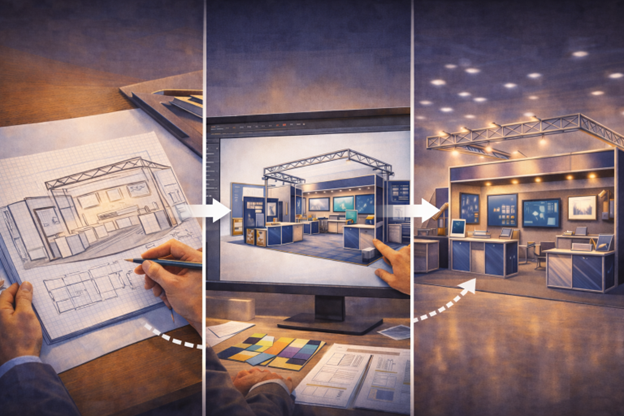
Step 6: Move from Idea to 3D Design
Once discovery is complete, the design phase begins.
You’ll see your booth come to life through detailed 3D renderings before anything is built. This is your opportunity to:
- Review layout and visitor flow
- Adjust branding and messaging
- Finalise demo areas and meeting spaces
- Approve the overall look and feel
Changes are simple at this stage. After fabrication begins, they’re not. Taking time here ensures confidence later.
Step 7: Approve and Begin Production
After final approval, production moves forward.
Your exhibit partner handles:
- Structural fabrication
- Graphic printing
- Crate preparation and protective packing
- Shipping coordination
While this happens, your internal team can focus on what truly matters-marketing materials, outreach campaigns, staff scheduling, and demo preparation.
Step 8: Plan Shipping and Installation Early
Shipping deadlines are strict. Missing advance warehouse dates or paperwork requirements can cause unnecessary stress and extra costs.
Your exhibit partner should manage:
- Freight coordination
- Advance warehouse delivery
- Drayage planning
- Installation crew scheduling
All of this takes place behind the scenes so your booth is ready when the show floor opens.
Step 9: Prepare Your Team-Not the Booth
When the operational side is handled professionally, your focus shifts where it should be:
- Training booth staff
- Refining demos and presentations
- Booking meetings with prospects
- Planning post-show follow-up
You arrive at the venue confident, knowing your space is ready and concentrate fully on engagement and results.
Step 10: Plan for What Happens After the Show
The show doesn’t end when the doors close.
Dismantle, return shipping, inspection, and storage should all be managed properly. A well-handled post-show process makes the next event significantly easier.
When your booth is stored correctly and inventoried carefully, you avoid damage, confusion, and unnecessary rebuild costs.
Why Starting Early Changes Everything?
When you begin weeks or ideally months-in advance:
- You avoid rushed design decisions
- You improve overall booth quality
- You reduce shipping risks
- You minimize last-minute stress
- You control costs more effectively
Early planning gives you flexibility. Whereas, late planning forces compromises.
The Simple First Step
Getting started doesn’t require a complex checklist.
It starts with a conversation.
Share your show details, goals, and budget with an experienced exhibit partner. Let them guide you step by step. When the process is structured properly, trade show preparation becomes predictable and manageable, not overwhelming.
Final Thoughts
Trade shows are too important to approach reactively. They represent your brand in a live, competitive environment where first impressions matter — especially when you’re planning a Custom Trade Show presence that reflects your brand’s identity and goals.
When you start early and work with the right team, you don’t just prepare for an event — you build confidence into every stage of the experience and ensure your Custom Trade Show booth stands out on the floor.
If your next show is already on the calendar, the best time to begin is now.
Planning a Custom Trade Show presence in 2026? Start early, define clear objectives, and partner with experienced exhibit professionals to protect your investment and maximize event ROI.
Visit The World Beast Business Events Desk for expert trade show insights that turn planning into performance.
