

Let me tell you something I’ve learned from years of studying how formulation chemistry intersects with consumer behavior: the hair care aisle is an exercise in deliberate vagueness. “For all hair types.” “Moisturizing formula.” “Strengthening.”
These are marketing statements disguised as scientific facts. If your hair is wavy and you have that stunning, uncontrollable wave shape that lies between straight and kinky, you know that that uncertainty is working against you.
Discover why wavy hair needs specialised shampoo and how using the wrong formula can damage texture, increase frizz, and disrupt hair health.
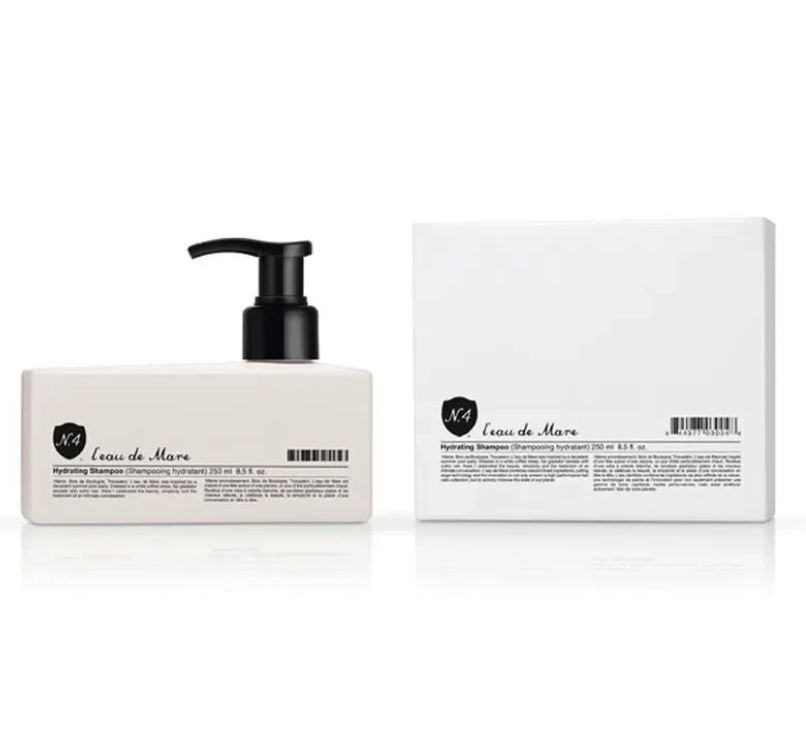
What Wavy Hair Actually Is
Here’s the thing about a wave pattern: it’s not just aesthetics. It’s physics. Each time that the hair strand takes a curve or a bend, it creates a natural weakness that causes the cuticles to peel up.
One can view the cuticle as little roof shingles on top of each other along the hair strand. The consequence of this is that curly hair is more porous than straight hair.
Moisture enters fast and escapes even faster. The oils produced by your scalp, which travel easily down a straight strand, get interrupted at every curve and crest of a wave. The result? Roots that can feel greasy while the mid-lengths and ends stay parched.
A generic clarifying shampoo hits this system like a pressure washer. Strips the scalp. Leaves the ends brittle. The wave pattern flattens, frizzes, or both. And then people tell themselves their hair is “just difficult.” It isn’t. It’s underserved.
What the Right Shampoo For Wavy Hair Does
Formulating an exclusive shampoo for wavy hair comes down to striking a balance between two contradictory forces: the shampoo should have the strength to clean the hair from any leftover products and sebum without compromising on its gentle properties that do not hurt the curls.
Specifically, you want a shampoo that doesn’t contain sulfates, like sodium cocoyl isethionate or decyl glucoside, instead of the harsh sodium lauryl sulfate found in these cleanse without blowing the cuticle wide open.
You also want humectants like glycerin or panthenol that draw moisture into the strand rather than sitting on top of it, plus lightweight emollients that define the wave without the weight that would drag a curl into a limp, undefined wave.
The pH matters, too. Wavy and curly hair thrives in the 4.5–5.5 range. A shampoo that’s too alkaline causes the cuticle to swell. The wave goes haywire. The frizz becomes structural, not just cosmetic.
What Happens When You Use the Wrong One
I’ll be honest with you: using the wrong product doesn’t always feel like a disaster in the moment. That’s the insidious part.
You shampoo with something designed for straight, color-treated hair, heavy silicones, and high-foam sulfates, and your hair feels clean. Squeaky even. But squeaky is not the same as healthy. “Squeaky” means stripped.
In the span of days and weeks, some other issues arise. Wave structure tends to break down as a result of constant irritation of the cuticle layer.
Instead of frizz being something uncommon, it will become your default look. Your scalp will start producing excessive amounts of oil due to the stripping effect, and cause you to wash your hair more often, resulting in another cycle.
It is quite an irritating process that costs people time and money while they seek out serums, masks, and special products without thinking about what is the root of the problem.
Research published in Journal of Cosmetic Science supports this, noting that repeated exposure to harsh surfactants can compromise hair fibre strength and moisture retention.
How to Read the Ingredient List
But everyone immediately starts looking at the back of a bottle, becomes intimidated by its chemistry, and just gives up. I understand you, but there are several ingredients you need to look out for.
Red flags: the first one to check for is SLS – sodium lauryl sulfate, dimethicone being used as a key conditioner (because it makes an extra barrier that prevents waves formation), and anything that claims to be “volumizing” but in reality, these formulas are too lightweight to provide any moisture retention.
Conclusion
Here’s the industry snark I promised you: a lot of brands that claim their shampoo for wavy hair is “specially formulated” are really just relabeling their moisturizing line with different marketing copy.
The formula barely changes. The curl-pattern photos on the front of the bottle are doing more work than the ingredients list.
The way out of this is simple, if a little tedious: look for brands that publish their full ingredient rationale, not just a highlight reel of their hero ingredients.
Look for a shampoo for wavy hair that’s developed in consultation with cosmetic chemists who specialize in curl and wave biology.
And give the formula a genuine trial six to eight washes, at a minimum, before you decide it’s working or not. Your hair has a memory, and it takes time to adjust.
Wavy hair isn’t hard to manage. It’s just been handed the wrong tools for too long. Find the right shampoo for wavy hair, understand why it works, and the wave does the rest.
Upgrade your haircare routine today. Explore expert-backed guides and product insights on The World Beast to achieve healthier, more defined wavy hair with the right shampoo choices.
