
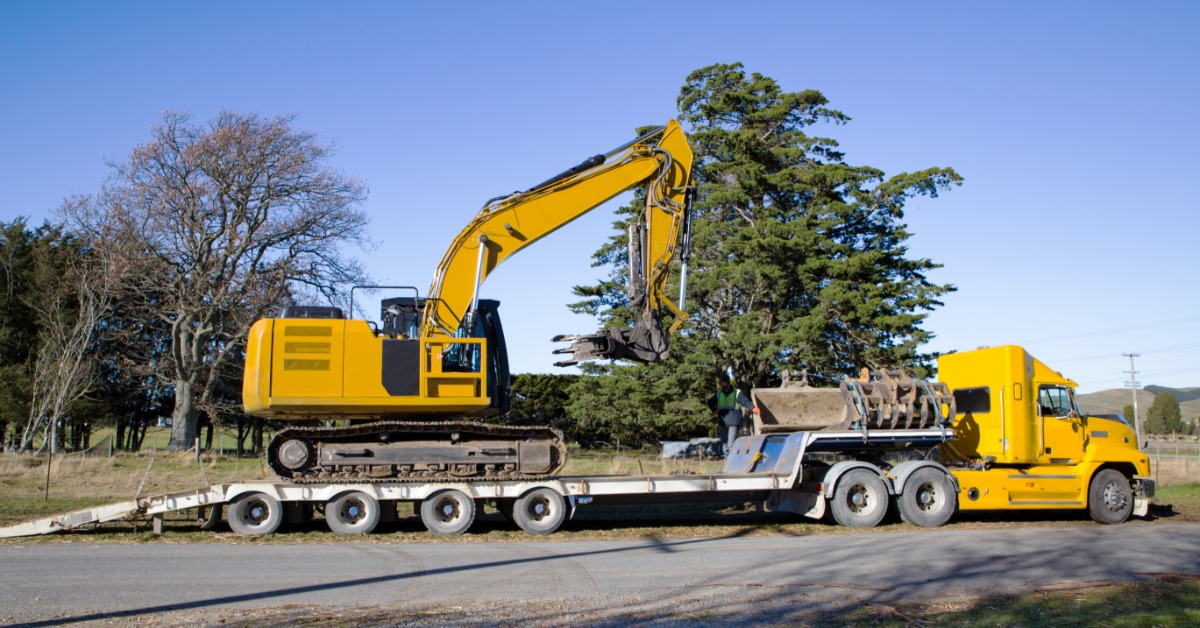
Moving heavy machinery, construction materials, industrial components, and other substantial freight presents challenges that ordinary transportation does not. Weight, dimensions, loading methods, road restrictions, and equipment capabilities can all affect how quickly and safely a shipment reaches its destination.
Improving efficiency when hauling large loads is not simply a matter of driving faster or reducing stops. Effective large-load hauling begins with careful equipment selection, accurate load planning, effective securement, and attention to the route. This can reduce delays while helping drivers maintain safe operations.
Match the Trailer to the Cargo
One of the most important decisions is selecting a trailer suited to the freight. Using equipment that is poorly matched to a load can complicate loading, increase handling time, or create dimensional problems later in the journey.
A standard flatbed provides an open, level deck that makes cargo accessible from the sides, rear, and above. That flexibility is useful for long materials, machinery, and freight loaded by forklift or crane. However, particularly tall equipment may benefit from a step deck, which positions much of the cargo closer to the road.
Understanding the practical differences between flatbed and step deck trailers can help operators evaluate equipment according to cargo height, loading requirements, and usable deck configuration before committing to a particular setup. The right choice ultimately depends on the individual shipment rather than a single trailer type being universally better.
Measure and Plan the Load
Accurate information prevents wasted time. Cargo should be measured at its longest, widest, and tallest points, including attachments or components that cannot be removed for transportation. Its total weight should also be established before loading.
Operators must consider more than whether the cargo physically fits on the trailer. Weight distribution matters because improper placement can affect handling and place excessive stress on individual axles or other components.
Developing a loading plan in advance allows crews to determine where individual pieces should be positioned. When multiple items are being transported, their unloading order can influence placement; cargo needed first at the destination should be accessible without requiring crews to move other freight around.
Plan the Entire Route in Advance
Route planning becomes particularly important when transporting freight that approaches or exceeds standard dimensional limits. The shortest route on a map is not necessarily the most efficient option for a large load.
Operators may need to account for bridge clearances, weight limits, construction zones, narrow roads, sharp turns, steep grades, and other physical restrictions. Oversized shipments can also be subject to permits, travel-time restrictions, or routing requirements that vary between jurisdictions.
Planning these details before departure reduces the likelihood of reaching an obstacle and having to backtrack. Alternative routes should also be considered in case weather, road closures, or unexpected traffic conditions disrupt the original plan.
Make Loading and Unloading More Efficient
Loading and unloading consume a significant portion of a transportation schedule. Coordination between drivers, equipment operators, and site personnel can reduce idle time at both ends of the journey.
Before arrival, confirm what equipment will be available. A shipment that requires a crane, forklift, or loading ramp can quickly fall behind schedule if the necessary equipment is unavailable or unsuitable for the cargo.
The physical characteristics of the site matter as well. Crews should know whether there is sufficient space for the truck and trailer to maneuver and whether the surface can support the loaded equipment. Identifying these limitations ahead of time makes it easier to establish an appropriate loading or unloading procedure.
Secure Cargo Correctly
Cargo securement is an essential safety consideration, but it also has an important relationship with efficiency. Rushing the initial securement process can lead to problems that require additional stops and adjustments.
Tie-down equipment should be appropriate for the cargo and its weight, and securement points should be positioned to control movement during acceleration, braking, turning, and travel over uneven roads. Chains, straps, binders, blocking, and other equipment should be inspected for damage before use and replaced when needed.
Loads and securement equipment should also be checked as required throughout transportation. Detecting a developing issue during an inspection is preferable to dealing with shifted or damaged freight later.
Keep Trucks and Trailers Properly Maintained
Mechanical reliability has a direct effect on hauling productivity. A breakdown involving a heavily loaded vehicle can cause significant delays, particularly when specialized towing, repair, or cargo-transfer equipment is required.
Routine inspections should address tires, brakes, lights, suspension components, connections, and other critical systems. Trailer decks, tie-down points, ramps, and securement equipment also deserve regular attention.
Preventive maintenance requires time, but planned maintenance is generally less disruptive than an unexpected roadside problem. Maintenance records can additionally help fleet operators identify recurring issues and address them accordingly before they become more serious.
Reduce Unnecessary Weight and Equipment
More equipment is not always better. Trucks should carry the tools and securement materials necessary for the shipment, but unnecessary items can add weight and create clutter.
Organizing equipment consistently also saves time. Drivers who know exactly where chains, straps, edge protection, warning equipment, and tools are stored can prepare loads and perform inspections more efficiently.
This becomes increasingly valuable for operators who routinely handle different types of freight. A standardized equipment-check process ensures essential items are available without loading the vehicle with materials that are unlikely to be needed.
Use Communication To Prevent Delays
Efficient transportation depends on information moving as reliably as the cargo itself. Drivers should have accurate addresses, site contacts, delivery windows, cargo information, and unloading instructions before departure.
Changes should be communicated promptly. If traffic, weather, mechanical trouble, or site conditions are likely to affect arrival, early communication gives other parties time to adjust.
For recurring operations, reviewing completed trips can also reveal patterns. Repeated delays at a particular loading site, problems with certain routes, or frequent securement adjustments may indicate an opportunity to change procedures.
Efficiency Comes From Preparation
The most effective ways to improve efficiency when hauling large loads usually involve eliminating preventable complications. Accurate measurements determine the right equipment, thoughtful route planning reduces unexpected obstacles, and organized loading procedures limit downtime.
No single practice makes every shipment straightforward. Large loads vary considerably in dimensions, weight, handling requirements, and destination conditions. Treating each haul as an individual logistics problem and planning accordingly creates a stronger foundation for safe, timely, and efficient transportation.
