
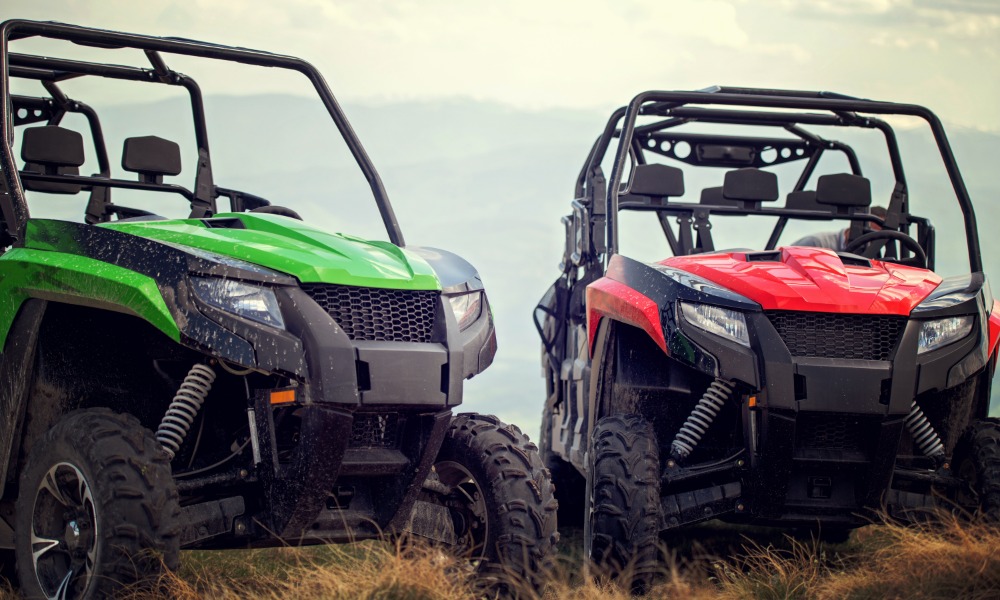
Love to hit the trails, and thinking about buying a UTV so you don’t have to rent one anymore? Here are the features to look for before you buy so you get a machine that fits the kind of riding you plan to do.
Engine Size That Fits Your Terrain
Engine size affects how much torque the UTV has available when the tires meet resistance. On a flat dirt trail, a smaller engine may have no trouble maintaining speed. Put that same machine on a steep climb, and you may need much more throttle to keep moving.
A larger engine gives you more power for those demanding sections, but bigger isn’t automatically better. Too much throttle response makes slow rock crawling harder to control. The better fit is an engine that climbs without straining while still letting you ease forward at low speed without jerky acceleration.
Ground Clearance That Matches the Trail
Ground clearance is the distance between the lowest part of the UTV and the ground beneath it. That measurement tells you how tall a rock or raised rut the machine can pass over before the underside hits.
If you ride on washed-out trails, low clearance increases the risk of scraping the frame or drivetrain housing. More clearance gives those parts extra space above the trail. There’s a tradeoff, though. Raising the body also raises the center of gravity, which can make the machine less planted on side slopes. Match the height to the terrain instead of chasing the tallest model.
Suspension Travel That Controls Rough Ground
Suspension travel tells you how far the wheel can move before the suspension reaches the end of its range. That extra movement becomes noticeable when you cross potholes or drop into ruts.
With short travel, the suspension bottoms out sooner and sends more of the impact through the chassis. Longer travel gives the wheel more room to move while keeping the tire in contact with the trail. That reduces hard hits through the seat and gives you better control over repeated bumps. During a test drive, pay close attention to how the machine reacts when one wheel drops lower than the others.
Four-Wheel Drive for Loose or Uneven Terrain
Four-wheel drive sends power to all four wheels instead of relying on just one axle. That gives the UTV more traction when the trail turns muddy or starts climbing over loose ground.
Some machines let you switch between two-wheel drive and four-wheel drive from the cab. Two-wheel drive works fine on firm terrain, while four-wheel drive gives you extra grip when the rear tires start slipping. If you ride on trails that change from hard-packed dirt to softer ground, selectable four-wheel drive gives you more control over how the machine puts power down.
Power Steering for Easier Low-Speed Control
Power steering reduces how much effort it takes to turn the wheel, especially when the UTV is moving slowly. You notice it most on tight trails where you’re making frequent steering corrections around rocks or trees.
Without power steering, the wheel can fight back harder when the front tires hit uneven ground. That gets tiring during a long ride and makes precise steering more demanding at low speeds. Electric power steering takes some of that resistance out of the wheel, which makes the UTV easier to guide through technical sections without wrestling with every turn.
Seating That Works for Your Group
Seat count should reflect how many people regularly ride with you, but the shape of the cabin deserves just as much scrutiny. Some three-seat benches put the middle passenger directly against the driver, while larger cabins give everyone more shoulder room.
Legroom matters too. A tall passenger may fit comfortably in one model and spend the entire ride with their knees pressed against the dash in another. Sit in each seating position before buying if possible. You’ll learn more from ten minutes in the cab than you will from a seat-count number on a spec sheet.
Tires That Suit Your Main Surface
UTV tires use different tread patterns for different ground conditions. Mud tires have deep lugs with wider spaces between them. As the tire rotates, those gaps let mud leave the tread instead of packing into it and turning the tire slick.
Trail tires use shorter tread blocks that put more rubber against hard dirt. They don’t dig into deep mud as aggressively, but they give you a smoother ride on packed surfaces. If most of your riding happens on maintained trails, aggressive mud tires may create extra vibration without giving you much benefit.
Audio That Works in an Open Cab
While a sound system isn’t necessary for a UTV, it’s a fun add-on if you like having music on the trail. Some options include soundbars, speaker pods, and stereo roofs. Soundbars work best when you want a compact setup mounted across the cab, while speaker pods let you place individual speakers around the vehicle.
Stereo roofs provide superior sound quality in open-cab UTVs, where wind and engine noise can drown out lower-mounted speakers. With the speakers positioned overhead, more of the audio reaches the seating area instead of getting lost outside the cab.
Skid Plates That Cover Vulnerable Areas
Skid plates are protective panels mounted underneath the UTV. They sit between the trail and parts you don’t want hitting rocks, including sections of the drivetrain and frame.
Coverage differs from one machine to another. A small plate may protect one component while leaving nearby areas exposed. Full-length protection covers a larger portion of the underside, which matters on rocky trails where obstacles pass between the tires.
Get underneath the machine before you buy if the dealer allows it. You want to see where the panels begin and end rather than relying on a vague “skid plate equipped” description.
Lighting That Fits When You Ride
Headlight beam pattern affects how much of the trail you can see after dark. A narrow beam reaches farther ahead, while a wider beam covers more ground beside the UTV.
On straight trails, extra distance gives you more time to spot obstacles ahead. On winding routes, wider coverage shows more of the trail edge before you turn into it.
If you ride at night regularly, don’t judge the headlights by brightness alone. Check the beam pattern in low light if possible. A powerful lamp pointed into one narrow area still leaves plenty of the trail hidden.
Pick The Machine You’ll Actually Use
A UTV should fit the rides you take most, not the fantasy trip you may never take. The features to look for when buying a UTV should line up with the terrain you ride most and the jobs you expect the machine to handle. Skip extras you won’t use and spend your budget where it improves the way you ride. A little patience during the shopping stage leaves you with a UTV you’ll still enjoy after the new-machine excitement wears off.
