
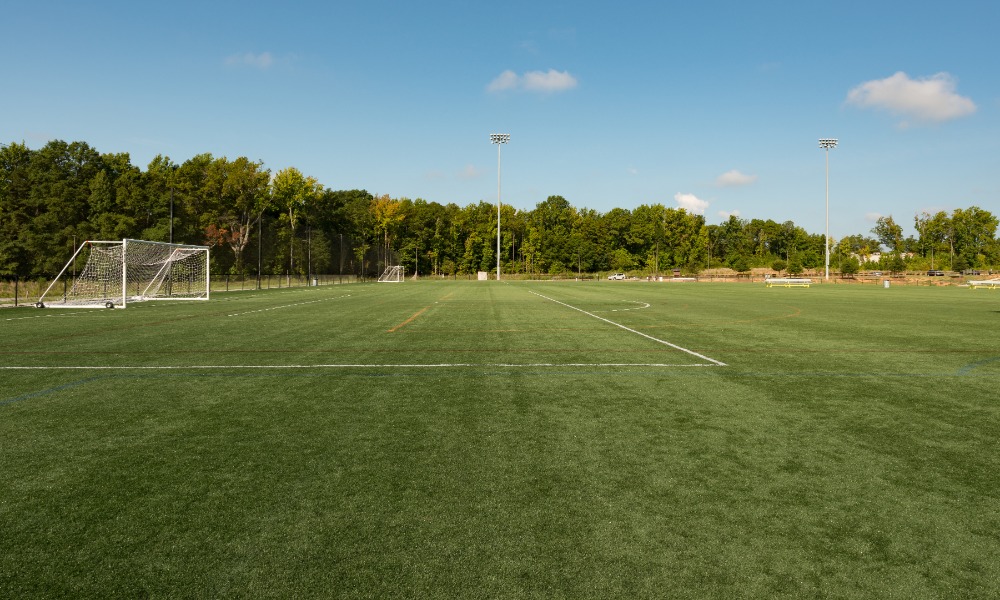
A community soccer venue has to work long before the opening whistle and after the final player leaves. Families need to reach the grounds, teams need a dependable playing surface, and organizers need a facility they can manage through a full schedule.
Those demands help explain what makes a great venue for community soccer. Field quality matters, but so does how the larger facility supports players and spectators. A successful venue brings those needs together without making game day harder than it needs to be.
The Playing Surface Sets the Foundation
Players spend most of their time on the field, making surface quality one of the first considerations. Natural grass requires maintenance that accounts for regular use and local growing conditions. Artificial turf comes with different maintenance needs and replacement considerations.
Whichever surface a facility uses, consistency matters. Uneven ground or damaged areas can interfere with play and create avoidable hazards.
Drainage also affects field availability. Standing water may force organizers to cancel games or keep players off the surface while conditions improve. A venue that hosts frequent practices and matches needs a field management plan suited to its climate and usage level.
Field Dimensions Need to Match the Players
Community soccer can serve different age groups, which means one field configuration may not suit every program. Governing organizations often use age-appropriate field dimensions for youth competition rather than placing younger players on a full-size adult field.
A venue that serves several divisions may need enough flexibility to accommodate different layouts. Field markings and goal placement should match the competition rather than forcing every team into the same setup.
Organizers also need adequate room beyond the touchlines. Players and coaches require designated team areas, while officials need enough clearance to oversee play without unnecessary obstructions near the field.
Access Starts Before Anyone Reaches the Sideline
A good venue considers the trip from the entrance to the field. Parking capacity matters, but the route people follow after leaving their vehicles deserves equal attention.
Clear paths can help visitors find fields without wandering through active playing areas. Facilities should also account for applicable accessibility requirements when designing routes and spectator areas.
Site organization becomes especially important at complexes with several fields. Straightforward field identification and visible directional signs can reduce confusion when multiple teams arrive around the same time.
Look at the Venue From a Visitor’s Perspective
Before considering decorative improvements, facility managers can evaluate a few basic questions:
- Can first-time visitors identify where they need to go?
- Are pedestrian routes separated appropriately from active play?
- Can spectators reach designated viewing areas without crossing team spaces?
- Do accessible routes connect the necessary areas of the facility?
Those questions focus attention on how people actually navigate the grounds rather than how the venue appears on a site map.
Lighting Extends How the Field Can Function
Lighting can increase the hours available for practices and matches, particularly when daylight becomes limited. Installing fixtures alone, however, does not guarantee useful illumination across a soccer field.
Facility planners must consider factors that affect lighting performance when evaluating a system. Fixture placement and mounting height affect how well light reaches the playing surface, and the design must also account for glare.
The appropriate system depends on the field and its intended use. A recreational facility does not automatically have the same lighting requirements as a venue designed for higher levels of competition.
Local requirements can also influence the project. Communities may regulate issues such as light spill or operating hours, so planners need to check the standards that apply to the site before finalizing a lighting design.
Spectators Need a Place That Works
Community soccer often brings parents and other supporters to the field, which makes spectator space part of the venue rather than an afterthought.
Seating does not have to resemble a stadium to function well. The important question is whether people can watch without interfering with players or officials.
Spectator area placement matters for the same reason. Keeping viewing zones clearly separated from team areas helps organize the sideline and reduces unnecessary traffic around benches.
Shade may deserve consideration in locations where daytime conditions make prolonged sun exposure a concern. The appropriate solution will depend on the site and available space.
Basic Facilities Affect the Entire Visit
A well-maintained field loses some of its usefulness if the surrounding facility cannot support the people who spend hours there. Restroom access deserves attention because tournaments and league schedules may keep families at a complex for extended periods.
Drinking water availability may also factor into facility planning, particularly where athletes practice in warm conditions. Whatever amenities a site provides, operators need a plan for keeping them clean and functional during periods of heavy use.
Waste management fits into that operational picture. Convenient disposal points can support routine cleanup, while scheduled maintenance helps the grounds remain usable between events.
Maintenance Has to Match the Schedule
Community fields often accommodate practices in addition to competitive matches. Frequent use places pressure on the playing surface and the surrounding infrastructure.
Maintenance planning should account for how often the venue operates. Natural grass may need recovery time between periods of intensive use, while artificial turf still requires regular care, depending on the system installed.
Other parts of the property also need attention. Goals and fencing should receive routine inspection so facility managers can identify damage that requires repair.
A realistic maintenance schedule also gives organizers a better basis for deciding when a field needs temporary closure. Protecting the condition of the venue may occasionally require limiting use rather than adding another booking.
Emergency Access Deserves Early Consideration
Organizers also need to consider how emergency personnel could reach the field. A complex may look accessible from its main entrance while individual playing areas sit much farther inside the property.
Routes should remain clear enough for the type of emergency access the facility requires. Staff should also know how to identify a particular field’s location when contacting emergency services.
Visible field numbers can support that communication at multi-field complexes. The goal is to reduce confusion when time matters rather than forcing responders to interpret an unfamiliar site layout.
The Best Venue Supports More Than the Match
A soccer facility becomes a community venue because people return to it week after week. That repeated use places different demands on the property than a field intended for occasional play.
Understanding what makes a great venue for community soccer means looking beyond the grass and goals. The venue needs to support safe play while making arrival and extended visits manageable for users.
When planners consider the field in relation to the rest of the site, they create a facility that can serve leagues and community programs over time. Good planning makes the venue easier to use without distracting from the reason everyone came in the first place: the game.


