
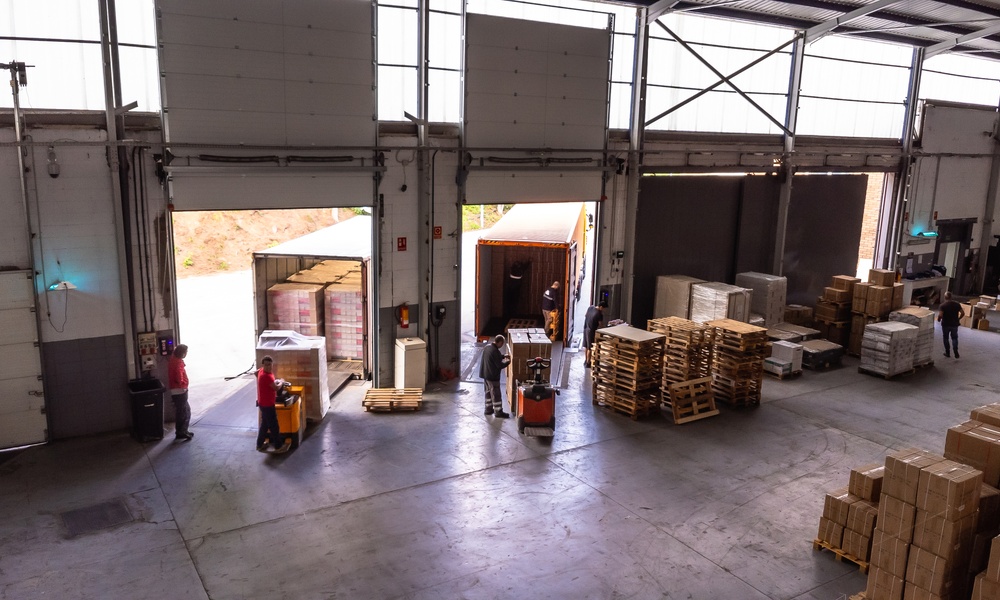
Warehouse productivity can suffer because small interruptions accumulate throughout a facility until teams lose valuable minutes during ordinary work. A forklift waits for a blocked aisle, an employee takes an unnecessarily long route to retrieve inventory, or a routine task stalls because the next step is unclear. Examining where warehouse productivity gets lost in daily operations brings these less visible problems into focus. By tracing friction back to its source, warehouse managers can make targeted improvements without treating every performance problem as a reason for sweeping operational change.
Congested Movement Creates Compounding Delays
Even a carefully planned warehouse layout can become inefficient once daily activity changes how employees actually use the space. Staging areas expand into travel lanes during busy periods, frequently used routes intersect, and temporary inventory occupies space that workers need for movement. Each obstruction may add only a small delay, but repeated trips through the same congested area can magnify its effect across an entire shift.
Reviewing movement as it occurs provides more insight than relying exclusively on a floor plan. Managers can examine where employees routinely wait for equipment to pass or where incoming goods interfere with established travel paths. Traffic patterns may change by shift or order volume, so observing the facility under different operating conditions can expose problems that remain hidden during quieter periods. Once those patterns become visible, changing a staging boundary or relocating a work area may restore smoother movement without requiring a major facility redesign.
Material Variations Disrupt Predictable Handling
Warehouse teams rely on consistency whenever they move loads through routine handling processes. Differences in dimensions or structural conditions can interrupt that predictability, particularly when workers use equipment designed around established specifications. What should be a familiar movement may require an adjustment before the employee can continue, adding friction to a repetitive task.
These interruptions can originate with the platforms supporting the loads and with the goods themselves, which is why warehouse productivity and pallet consistency can become closely connected during daily handling. When workers encounter predictable load configurations, they can complete routine movements without repeatedly adapting their approach. Managers investigating lost productivity should therefore look beyond employee performance and consider whether variations in the materials moving through the facility are creating extra work.
Poor Inventory Placement Extends Every Trip
Travel distance can consume labor when inventory placement no longer reflects current demand. Frequently picked products may remain far from packing areas because their locations made sense under an older order pattern. Meanwhile, slower-moving stock can occupy highly accessible positions simply because no one has revisited the original slotting decision.
Products with frequent orders may warrant locations that reduce repeated travel, while seasonal demand can justify temporary changes before volume increases. Managers should consider how replenishment affects those decisions as well, since an efficient picking location can still create complications if restocking repeatedly interferes with active work. Treating slotting as an evolving operational decision allows the warehouse to respond as inventory behavior changes instead of preserving arrangements that no longer support current activity.
Minor Equipment Issues Alter the Pace of Work
Equipment does not need to stop functioning completely before it reduces output. A scanner with an unreliable response or a forklift that requires repeated operator adjustments can interrupt an employee’s rhythm throughout the day. Because each delay seems minor on its own, workers may compensate informally and allow the underlying problem to remain unresolved.
Those workarounds deserve attention because they reveal where equipment performance has shaped employee behavior. Maintenance records and operator feedback can expose recurring faults that broad productivity figures may hide. Managers can gain further insight by comparing when interruptions occur with the tasks being performed. A recurring delay associated with one process may indicate that equipment requirements have changed even when the machinery itself remains functional. Correcting the source removes the workaround and allows the affected task to return to its intended pace.
When warehouse software requires recurring manual corrections or handheld devices repeatedly slow a transaction, employees may add precautionary steps to their routines. Tracking those adaptations can reveal technology problems that remain invisible when managers measure only whether a system is technically operational.
Unclear Procedures Add Decision Time
A routine task slows considerably when employees must determine the correct response while performing it. Ambiguous procedures can force workers to locate a supervisor or interpret a situation independently, particularly when an exception falls outside the normal workflow. When shifts develop their own approaches to the same problem, uncertainty can spread beyond individual decisions and become embedded in the facility’s operating habits.
Managers can uncover these procedural gaps by paying attention to recurring questions and situations that repeatedly require clarification. Establishing a clear response for common exceptions reduces hesitation while preserving employee judgment when unusual circumstances arise. Comparing practices across shifts can reveal where written procedures leave room for conflicting interpretations or fail to reflect how work occurs. Clearer guidance can then address recurring uncertainty without imposing unnecessary rules on tasks that employees already handle effectively.
Weak Handoffs Carry Delays Forward
Some productivity losses originate before the affected employee even begins a task. Warehouse work moves between teams throughout the day, which means incomplete information from one stage can create additional work at the next. A picker who receives outdated inventory information, for example, may investigate a discrepancy that began during an earlier process.
Reliable handoffs prevent one interruption from traveling farther through the operation. Accurate system updates can give the next employee enough context to continue without reconstructing what happened previously. Shift changes deserve particular attention because responsibility can transfer while orders, replenishment work, or exceptions remain unresolved. Establishing a consistent method for communicating outstanding work gives the incoming team a clearer starting point. When managers investigate delays, tracing them backward through the workflow can reveal whether the visible slowdown is actually the consequence of an earlier communication gap.
Make Everyday Friction Easier To See
Broad productivity figures can show that performance has changed, but they don’t explain where employees are losing time. Managers gain a clearer picture by examining recurring interruptions within individual tasks and following those delays to their source. Doing so separates isolated incidents from patterns that genuinely affect throughput.
Finding where warehouse productivity gets lost in daily operations ultimately means paying closer attention to ordinary work. Once managers can see where friction begins, they can address specific causes while preserving the parts of the operation that already function efficiently.
