
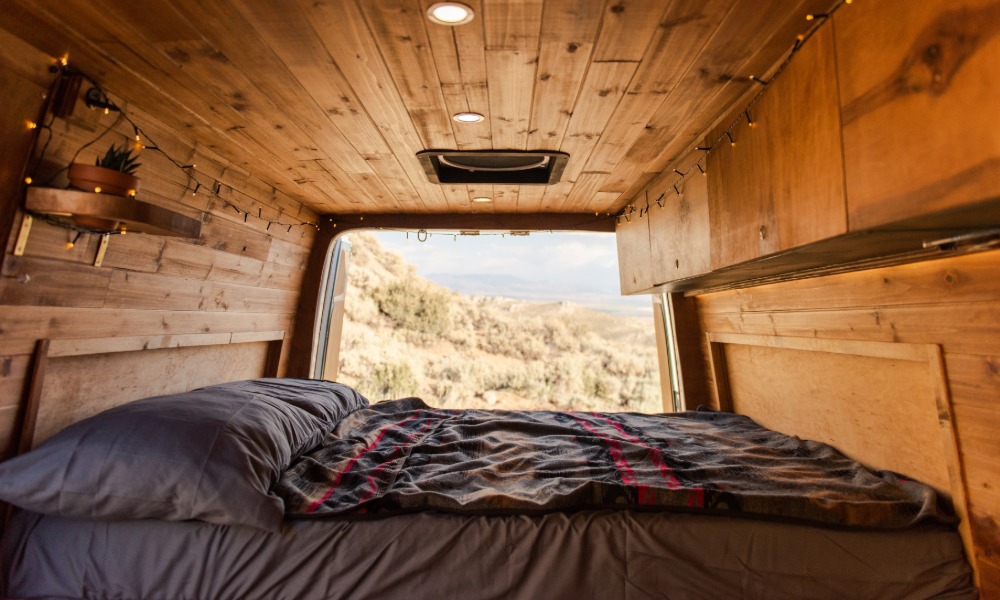
A comfortable bed can quickly become the biggest obstacle inside a camper van. You need enough room to sleep well, but dedicating too much of the interior to a mattress can leave you squeezing through narrow walkways or constantly moving gear. Understanding why camper van beds take up too much space can help you avoid a cramped setup from the beginning. With the right layout, you can protect your sleeping comfort while making better use of the van during the day.
Bed Size Is Only One Factor
When you picture the bed inside an empty van, you might focus on the mattress dimensions. Once you build out the surrounding interior, however, you need to account for the bed frame and enough clearance to reach the sleeping area comfortably. A bed that fits on paper may interfere with the way you move once you add the rest of the interior.
You’ll notice this problem most when the bed sits lengthwise. That orientation can consume a substantial portion of the available floor, particularly when you need a longer sleeping surface. You may gain comfort at night while sacrificing space you could use throughout the day.
Fixed Beds Claim Permanent Space
If you choose a fixed bed, you’re dedicating that section of the van to sleeping around the clock. You can’t reclaim the footprint when you wake up, which limits what you can do with the surrounding area. For some travelers, that tradeoff makes perfect sense because they don’t want to assemble a bed every evening.
Think about your daily routine rather than judging the setup solely by its sleeping comfort. If you spend most of your time outdoors and mainly enter the van to sleep, a permanent bed may cause few problems. If you cook or relax inside for hours, the same bed can become a much bigger constraint.
Your Layout Shapes the Space
You can’t judge a camper bed separately from everything around it. A large bed becomes harder to live with when nearby cabinets leave you with an awkward path through the van. You may technically fit everything you want while creating an interior that’s frustrating to use.
You’ll make better use of your space when you plan the bed as part of the entire interior rather than as a separate feature. With many Ford Transit camping layouts, where you place the sleeping area affects the room you have left for storage and everyday movement. Thinking through those relationships early can help you avoid a setup that works at night but gets in your way during the day.
Storage Changes the Equation
A permanent bed doesn’t necessarily make the space beneath it unusable. If you raise the sleeping platform, you can use the area underneath for storage. That approach can make a fixed bed more practical when you regularly travel with bulky outdoor gear.
Access matters just as much as capacity, though. If daytime space matters more to you, consider a sleeping area that serves another purpose after you wake up. You’ll get more from the available space when you match each storage area to the gear you need to reach.
As you plan the area beneath your bed, keep a few practical questions in mind:
- Can you reach frequently used gear easily?
- Will large equipment fit through the opening?
- Can you access storage when the bed is occupied?
- Does the platform leave enough sitting headroom?
- Can you keep your everyday walkway clear?
Convertible Beds Recover Floor Space
If daytime space matters more to you, consider making the sleeping area serve another purpose after you wake up. A convertible bed can become seating and give you back valuable room during the day. You’ll have more flexibility when bad weather keeps you inside or when you simply want somewhere comfortable to sit.
That flexibility does require more setup time. Converting furniture every morning and evening might seem minor during a weekend trip, but you may grow tired of the routine during longer travel. You need to decide whether permanent convenience or daytime room matters more to the way you camp.
Simple Conversions Work Better
You’ll probably appreciate a convertible bed more when the setup doesn’t turn into a project. If you must move piles of gear whenever you change configurations, the extra floor space can stop seeming worthwhile. You’ll also need a practical place to store your bedding during the day.
Keep the conversion process in mind while you design the surrounding storage. You want to move from sleeping to daytime use without emptying half the van first. A straightforward setup can give you flexibility without adding an annoying chore to your routine.
Sleeping Direction Matters
The direction you sleep can change the amount of interior length your bed consumes. If your height and the van’s finished dimensions allow it, sleeping across the width may leave more room elsewhere in the layout. Taller travelers may need a lengthwise arrangement to sleep comfortably.
Don’t assume an orientation will work because you saw it in another conversion. Insulation and finished walls reduce the van’s original interior dimensions, so measure the completed sleeping area carefully. Your own height and preferred sleeping position should guide the final dimensions.
Bigger Isn’t Always Better
It’s tempting to make your van bed as close to a household bed as possible. You may appreciate the extra sleeping room, but every added inch reduces the space available elsewhere. A larger mattress can push nearby features closer together until the whole interior becomes harder to navigate.
At the same time, making the bed too small creates a different problem. You won’t gain much from a spacious daytime layout if you can’t sleep comfortably at night. The goal isn’t to build the smallest bed possible; it’s to give yourself enough room to sleep comfortably without overwhelming the layout.
Build Around Daily Use
A camper van doesn’t give you enough room to treat every feature as a separate project. Your bed affects the way you move through the van and use the interior once the doors close. Once the layout is in place, test it as if you were already on a trip instead of judging it only by the measurements.
Walk through your usual routine and pay attention to anything that forces you to squeeze past furniture or move gear out of the way. Sit, lie down, and reach the storage areas you expect to use most often. If the space works without constant adjustments, you’ll have a much better sense that the layout will hold up once you’re on the road.
