
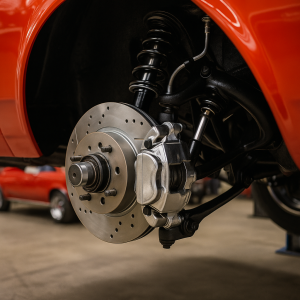
The unsung heroes of classic car safety and performance.
Restoring a classic or muscle car is more than a mechanical project—it’s a personal tribute to automotive heritage. Whether it’s a 1969 Camaro or a vintage Falcon GT, the goal is often to preserve history while giving the vehicle a second life. However, amid all the talk about engine swaps and paint jobs, one critical component tends to be overlooked: the brake system. In any restoration project, the brake system plays a pivotal role—not just in ensuring safety, but also in maintaining driveability and enhancing the vehicle’s performance credentials.
Why Brake Systems Deserve More Attention in Restorations
Many classic cars were built during an era when safety regulations were nowhere near today’s standards. Drum brakes, single-circuit hydraulics, and no power assistance were common, and while they might look authentic, they rarely meet modern driving expectations.
For enthusiasts driving their restored vehicles on Australian roads, this poses a serious issue. Whether you’re cruising down the Hume Highway or taking a Sunday spin through the back roads of the Blue Mountains, having a reliable, high-performance brake system may be the difference between a safe stop and a costly mishap.
The Challenges of Preserving Original Brake Systems
One of the main issues restorers face is the tension between originality and practicality. Keeping an OEM (original equipment manufacturer) brake setup might score points at a concours event, but it can fall short in terms of actual performance. Drum brakes, for example, are prone to overheating and provide uneven stopping power—especially in heavier vehicles like muscle cars.
Beyond performance, sourcing replacement parts for outdated systems can also be a headache. Some components are no longer manufactured or may be prohibitively expensive to source in good condition. This is where many restorers opt for discreet upgrades that improve functionality without compromising the vehicle’s vintage appearance.
Modern Solutions That Respect the Classic Look
Thanks to modern engineering, it’s entirely possible to upgrade brake systems while preserving the aesthetic integrity of a classic build. Restomod brake kits have become popular, blending today’s stopping power with yesterday’s design cues. These may include front disc conversions, proportioning valves, dual-circuit master cylinders, and even power-assisted boosters designed to mount cleanly behind firewall panels.
Finding reliable, compatible parts is crucial—and that’s where suppliers like Brake Systems – Cruisin Automotive come into play. With their deep catalogue of brake components specifically tailored for muscle cars, hot rods, and classic builds, enthusiasts may confidently modernise their braking systems without compromising authenticity.
Prioritising Brakes Over Engine Mods? Here’s Why
It’s tempting to jump straight into engine upgrades, especially in performance-centric restorations. However, adding horsepower without considering your stopping power is like putting a turbo on a go-kart—it’s dangerous and unbalanced.
As highlighted in Top Automotive Modifications That Make a Difference, effective upgrades often begin with braking and suspension improvements. Brakes directly impact vehicle control, responsiveness, and overall driving confidence. In fact, it’s often said in the restoration world: “Build it to stop before you build it to go.”
Case Study: A 1972 Holden Monaro Restoration
Let’s take the example of a 1972 Holden Monaro restored for weekend driving. The car originally came with four-wheel drums, no brake booster, and a single master cylinder. While this setup was standard in the 70s, it didn’t offer adequate stopping power for today’s traffic or driving conditions.
The restorer chose a front disc conversion with ventilated rotors, braided brake lines for improved fluid pressure, and a dual-circuit master cylinder for redundancy. The components were sourced from Cruisin Automotive, whose range of classic and custom car parts allowed the build to retain its original wheels and hubs without extensive fabrication.
The result? A safer, smoother braking experience with no visual compromise under the hood.
Choosing the Right Brake Kit for Your Build
When deciding how to upgrade your classic’s brake system, there are several factors to consider:
- Intended use: Is the car a daily driver, show car, or track day special?
- Weight and power output: More power equals greater stopping needs.
- Original wheel size and clearance: Larger calipers may not fit under small vintage wheels.
- Compatibility with suspension and steering geometry: Always ensure matched component specs.
Stainless steel lines, performance pads, and slotted or drilled rotors may provide added benefits for those after more spirited performance.
Brake Systems and Vehicle Value
Beyond function, upgraded brake systems may positively affect your vehicle’s value. Buyers today look for vehicles that are both nostalgic and practical. A restored vehicle that stops reliably—and does so without squealing, fading, or pulling—demonstrates quality workmanship.
In fact, according to a recent article on Why Classic Cars Are Gaining Value Again, vehicles that blend visual authenticity with smart modern upgrades are commanding higher prices in today’s market.
Final Thoughts: Preserve the Legacy, Improve the Ride
Restoring a classic vehicle is a labour of love, but it’s also a matter of safety, responsibility, and performance. While it’s easy to get swept up in chrome detailing and V8 rumble, don’t overlook the silent hero beneath your feet: your brake system.
With modern kits designed for older models and accessible online suppliers like Brake Systems – Cruisin Automotive, there’s no excuse not to bring your vintage beauty into the 21st century—safely and stylishly.
Give your classic the stopping power it deserves—because true performance starts when the pedal goes down.
