
The Trump–Mamdani meeting signals an unexpected political shift as former rivals show rare alignment, sparking debate about its impact on U.S. and NYC politics.
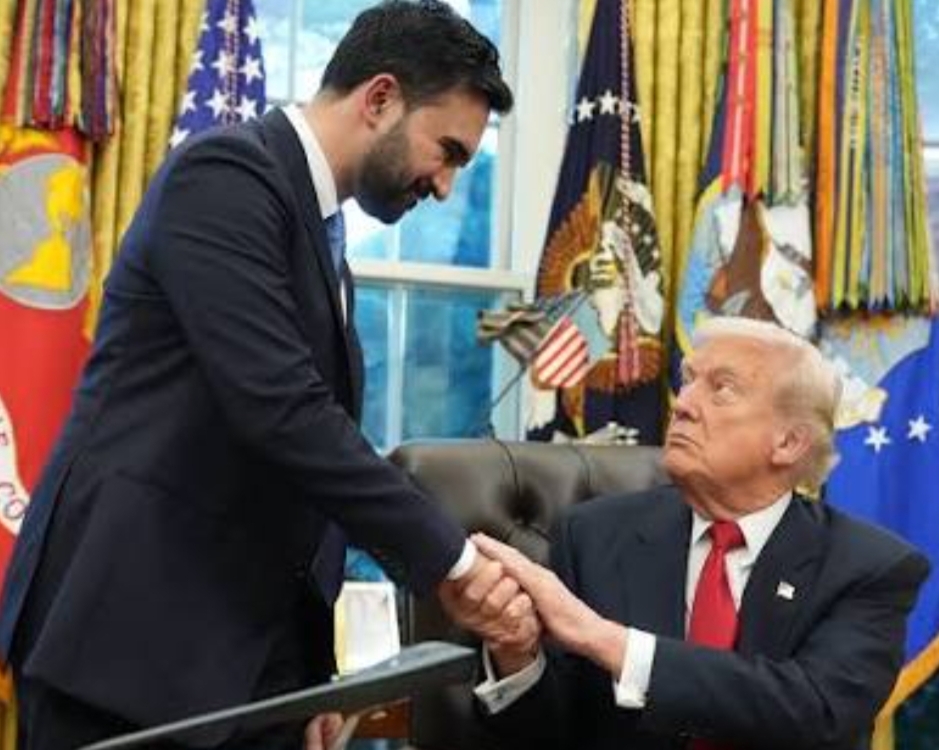
A White House meeting between President Donald Trump and New York City mayor-elect Zohran Mamdani delivered an unexpected shift in tone, turning what many anticipated would be a tense political encounter into a remarkably friendly exchange.
The two men, who have clashed sharply in the past, appeared aligned on several key issues as they spoke to reporters after their Friday discussion.
Trump opened the press remarks with notable praise for Mamdani — the same figure he once branded a “jihadist” and threatened to strip of citizenship.
The president highlighted Mamdani’s focus on rising costs and daily financial pressures facing New Yorkers. He described the meeting as “great” and “productive,” saying both leaders shared a commitment to helping the city “do very well.”
Mamdani, who is set to become New York City’s first Muslim mayor, echoed Trump’s description of the conversation.
He said the discussion centered on affordability concerns, including rent, utility bills, and grocery prices. He emphasized that the meeting was grounded in shared admiration for the city and its residents.
The encounter took place at a moment when affordability has become central to national and local campaigns.
Trump has struggled to bring down costs and has shifted back to economic messaging as his approval ratings fluctuate.
Mamdani, meanwhile, faces skepticism from influential business leaders who worry he could disrupt sectors tied to real estate and Wall Street. Friday’s meeting gave him an opportunity to signal he intends to maintain economic stability.
Politically, Mamdani stands far from Trump. A democratic socialist, he embraces New York’s global identity and has defended Palestinian rights.
Trump’s political narrative has often framed immigrants as threats and previously included a push to ban Muslims from entering the country.
Despite these deep ideological divides, the two leaders presented a united front during their public remarks.
At one point, Trump even defended Mamdani against Islamophobic rhetoric.
When a reporter asked whether he believed he had “a jihadist” standing beside him, Trump quickly rejected the claim. “No, I don’t,” he said, adding that Mamdani was “a very rational person.” Mamdani remained composed as Trump addressed the question.
Their unexpected friendliness surprised many political observers. Some Republican lawmakers voiced discomfort afterward, saying they still did not trust Mamdani even with Trump’s endorsement.
The moment highlighted the unusual nature of the exchange and the shifting political calculations surrounding New York City’s incoming leadership.
When asked whether Mamdani’s leadership might inspire Trump to return to his home city, the president nodded. “Yeah, I would,” he said. “Especially after the meeting.”
The encounter marked a rare moment of political warmth between two figures who often symbolize opposite visions for the country — leaving open the question of whether this cooperation will continue once Mamdani takes office.
