
Experts say if Russia loses to NATO, Putin might feel trapped and act more dangerously, possibly even thinking about using nuclear weapons to stay in control. It doesn’t mean it will happen, but it’s a warning about how risky the situation could become.
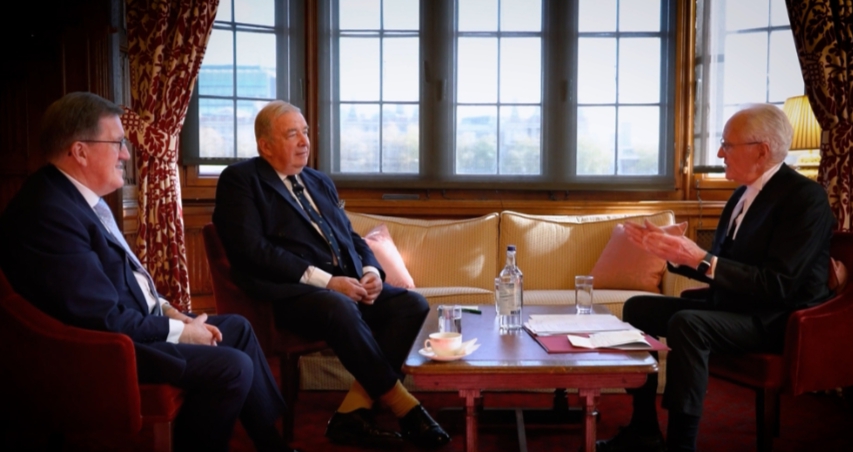
Russia would be defeated in a direct war with NATO, but such a loss could push President Vladimir Putin toward considering nuclear action, former UK Security Minister Lord West has warned.
His assessment adds to growing concern among defence leaders that rising global instability is testing the UK’s readiness and its ability to respond to threats.
Lord Robertson, who served as Defence Secretary between 1997 and 1999, said the UK is currently “under-prepared and under attack.”
He noted that the security environment is shifting rapidly, with hostile states using conventional and unconventional methods to pressure Western governments.
Speaking on the Lord Speaker’s Corner podcast, Lord West said finding a path out of the Russia–Ukraine conflict is increasingly difficult. “One doesn’t want a full war between NATO and Russia,” he said. “They would lose it. And the danger with them losing it is – would they then make that stupid mistake of going nuclear?”
Lord West warned that Russia has expanded its covert operations in Europe, turning to criminal groups to carry out sabotage.
He said Moscow relies on these networks because direct involvement would be too easily detected. One of the most sensitive targets, he explained, is the vast network of undersea cables that carry nearly all global digital communications. “They are vulnerable and they’re watching them and, in some cases, attacking them,” he said.
The remarks come as experts highlight the increasingly hybrid nature of modern conflict, with cyberattacks, infrastructure disruption and information warfare becoming central tools for Russia and other rival states.
The conversation also focused on China, which both West and Robertson described as a long-term challenge for the West.
Lord West recalled his experience leading a battle group during the handover of Hong Kong in 1997.
He said the situation at sea was far more tense than the public understood. “The Chinese Navy were trying to ram our ships. They were opening missile doors,” he said, describing encounters that underscored the seriousness of Chinese military behaviour.
Lord Robertson argued that Western governments must stay engaged with China but tread carefully. “We’ve got to engage with China, but recognise that it is going to be the future challenge – militarily, commercially and diplomatically,” he said. “It’s probably better to call the Chinese a problem rather than a threat at the present moment.” He added that clarity and caution will be essential as global power competition intensifies.
Lord West also shared a rare insight into the nuclear chain of command on 9/11. He recalled receiving a call from the UK’s nuclear firing cell as the United States raised its nuclear readiness across all systems. “They said… ‘Sir, the Americans are starting to move to immediate readiness for nuclear weapon release in all three systems.’ That’s strategic air, intercontinental ballistic missiles and subsurface… ‘What do you want me to do?’”
The episode highlighted how quickly global crises can escalate and how critical clear decision-making becomes in moments of uncertainty.
As the war in Ukraine continues, tensions with China grow and reports of sabotage increase, defence experts say Western governments must prepare for a world where threats emerge simultaneously and without warning.
Lord West’s warning underscores a broader message from senior figures: the UK must strengthen its resilience, modernise its defences and anticipate the complex risks of a more volatile era.
