
A shallow 4.9 earthquake struck near Indio Hills on the San Andreas Fault, triggering alerts and strong shaking across Southern California.
Southern California Shaken by Shallow 4.9 Earthquake
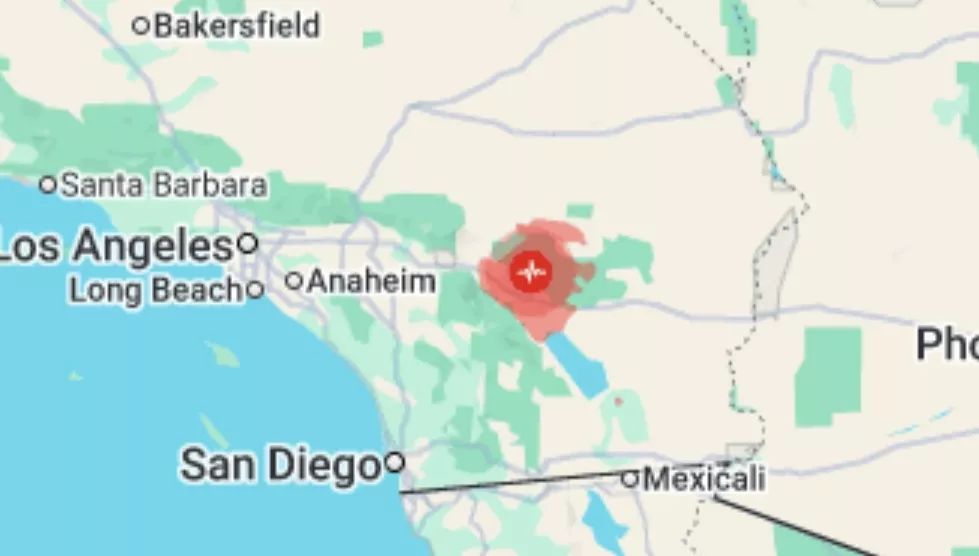
USGS map showing the epicenter of the 4.9 earthquake near Indio Hills
Southern California was jolted Monday evening after a 4.9-magnitude earthquake struck near Indio Hills, sending tremors across desert communities and parts of the wider Los Angeles region.
According to the U.S. Geological Survey (USGS), the earthquake occurred at 5:56 p.m. local time, with an epicenter located approximately five miles northeast of Indio Hills, directly along the San Andreas Fault system.
The quake was classified as shallow, striking at a depth of just two miles underground, a factor that significantly increased the intensity of shaking felt at the surface.
Emergency Alerts Sent Across the Region
Residents across Southern California reported receiving USGS ShakeAlert emergency notifications moments before the ground began to move.
The alert read:
“Earthquake Detected! Drop, Cover, Hold On. Protect Yourself.”
The system, designed to provide seconds of warning before seismic waves arrive, appears to have functioned as intended for many residents, according to widespread social media reports.
Widespread Shaking Felt Across Southern California
Within minutes of the quake, residents took to social media platforms to report their experiences, with descriptions ranging from brief jolts to sustained rolling motion.
- One user wrote that the quake “shook the hell out of us.”
- Another described it as a “strong shaker in the desert.”
- A resident in Orange County reported feeling her apartment building sway noticeably.
While no immediate injuries or structural damage were reported, officials cautioned that aftershocks remain possible in the hours and days following the initial event.
Why the Earthquake Felt So Strong
Seismologists note that shallow earthquakes, even those of moderate magnitude, often feel stronger than deeper quakes because seismic energy has less distance to travel before reaching the surface.
The San Andreas Fault, one of the most closely monitored fault systems in the world, is capable of producing significantly larger earthquakes, making events like Monday’s quake a reminder of California’s ongoing seismic risk.
Safety Guidance: What to Do During an Earthquake
Emergency officials reiterated standard earthquake safety guidance following the quake.
According to experts cited by the Sacramento Bee, the safest response during shaking is:
- Drop to your hands and knees
- Cover your head and neck
- Hold on to something sturdy
Additional safety advice includes:
- If using a wheelchair or walker, lock the wheels and remain seated
- Crawl under a sturdy table or desk if available
- If no shelter is nearby, move to an interior wall away from windows
Officials stress remaining in position until the shaking completely stops.
Aftershocks Remain Possible
The USGS warned that aftershocks may occur, which can sometimes cause additional damage, particularly to already weakened structures.
Residents in affected areas are advised to:
- Inspect homes for cracks or gas leaks
- Avoid damaged buildings
- Stay informed through official emergency channels
Why This Earthquake Matters
While a 4.9-magnitude earthquake is not considered major, its location on the San Andreas Fault draws particular attention from scientists and emergency planners.
Experts consistently emphasize that moderate earthquakes do not relieve pressure on major fault lines, meaning they do not reduce the likelihood of future large events.
Stay informed on breaking earthquakes, climate events, and emergency alerts. Follow The World Beast for real-time updates, expert analysis, and trusted news coverage.
